Meet David and Barbra Gondongwe
Vida Li Sik • January 26, 2021
Spotlight on the leaders of the church in Bulawayo
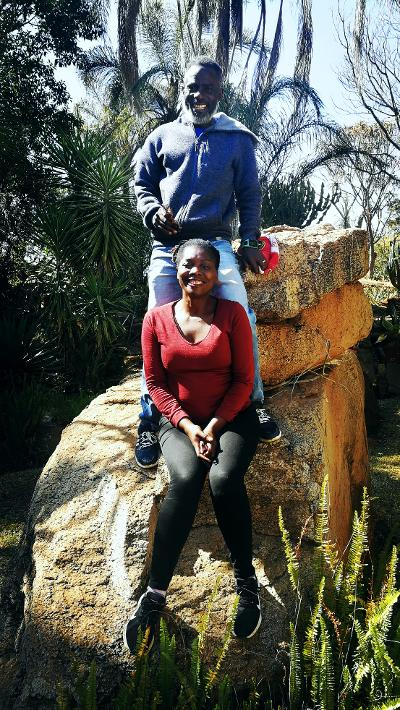
This year, we’ll take time to get to know some of our leaders in the Southern African region of churches. First up are David and Barbra Gondongwe, who lead the church in Bulawayo, Zimbabwe. David and Barbra entered the full-time ministry in 2008 and led the church in the capital, Harare, for 10 years. They moved back to Bulawayo in 2018. Life in the city is tough and characterised by high unemployment, made worse by the COVID-19 pandemic. Poverty is rife, and the population is battling to make ends meet. Most people survive by "hustling"—buying and selling whatever they can lay their hands on. Generally, it is common to see a woman sitting on the side of the street, and trying to sell a heap of very small, shriveled lemons. Some gather wild fruits from surrounding bushes, or collect Mopane worms which they try to sell to passers-by. Men beg to clean your vehicle for a small fee. Despite all the economic hardship and death of loved ones, in 2020 the church in Bulawayo grew to 78 members–with 10 baptisms and one restoration. The church is very grateful for the benevolence funds they received from sister churches and praise God for his loving faithfulness towards them.
Where were you met?
David:
In 1990, a colleague and I stopped by a supermarket in Avondale, Harare. I was pushing a large trolley that fell over and spilled its contents. For one long, embarrassing moment, the other shoppers gave us their complete attention. Then, as if by magic, a giant white man and his wife appeared (Kevin and Andee Finnerty who are now elders in NYCC) to help us. They invited us to church, but I bluntly told them, “I don’t do church.” They also gave me an invitation card to church, which I accepted because I didn’t want to seem ungrateful. At that time I was in the army but on attachment at the biochemistry department of the Public Health Laboratories as part of my Medical Laboratory Technology training. For a whole month, twice a week, we received phone calls from Kevin and Andee inviting us to midweek and Sunday service. Eventually I said to my colleague, “let us just go once then tell them we did not like it,” because they kept saying, ‘just come and see. You don’t have to come back if you don’t like it.’
One Sunday morning we went to church. I was still single then. I don’t remember the sermon title, but I vividly remember the point the preacher man made: that any sex outside of marriage is a sin. What convicted me was that I saw in his eyes that he believed it was possible for single people to abstain till marriage. That was a very noble idea. The challenge was that I was still single with no steady girlfriend, meaning if I committed myself I would need to stay pure for many years. I'm always one for taking up a good challenge, so I studied the Bible and a month later, on 30 November 1990 I was baptised.
Barbra:
I was met on campus, at The University of Zimbabwe, in 1990. I was at the lowest point of my life. The previous college break, I had just survived what I now understand was severe depression. I had just collapsed, while I was at my parents’ home, and knew that I was dying, even though I didn’t know why. I had just come out of a seriously confusing time. In my first year on campus, I’d been involved in a lot of sin; it killed something inside of me and I was just a shell of the happy, bubbly me.
A college mate invited me to a games afternoon. I told her I wasn’t interested. I was quite antisocial at that time and really didn’t like people. I was a loner. That afternoon, I went for my usual lonely walks. By default, my road passed by the house where the games were taking place. I could hear lots of laughter, and so I just peered in through the gate. Of course disciples quickly invited me in and totally embraced me. Somehow, I loosened up, and ended up being the happiest, loudest girl at that party. At the end of the day, they asked me if I would like to study the Bible. I agreed, but I was religiously proud and believed I knew the Bible more than most people. But by the time we had looked at the first few scriptures of the word study, I was totally humbled. I loved the studies and studied almost every day. I spoke about the mess of my life, cried my heart out and felt the burden of sin fall off. I was restored to my old happy self. Within that same month, I was baptised. I have never looked back. I continue to be humbled by God’s love and goodness to me.
What is your favourite Bible verse?
David:
My favourite verse is Ephesians 4:2 “Be completely humble and gentle; be patient, bearing with one another in love.”
Barbra: For me, it’s Jeremiah 29.11 “For I know the plans I have for you,” declares the LORD, “plans to prosper you and not to harm you, plans to give you hope and a future.” It kept me sane, those many years ago, when I broke up with my American boyfriend. He was an exchange programme student from Michigan, who after the mess of my first year, had just accepted me as I was and loved me. He went back to the States and bought a ticket for me to follow. But, about two or three weeks before my flight, I started studying the Bible. At the end of my studies, I had to make a decision to pursue my relationship with my boyfriend, or to seriously pursue and hold on to my relationship with God. I chose the latter, and have never looked back. Now, 28 years later, married to a hunky, handsome guy who loves God more than he loves me, my cup overflows.
If you could witness any great event in the Bible, which one would it be, and why?
David:
For me, it would be the crossing of the Red Sea, and the total annihilation of the mighty Egyptian army. I love and feel inspired by a good fight, especially one in which the underdog triumphs. Inspired as I already am, to see it live would boost my faith for eternity.
Barbra:
The angel Gabriel’s visit to Mary to tell her she would conceive and be the mother to a son, Emmanuel. The simplicity of her faith, and her acceptance of God’s wish, amazes me. I think that conversation is just so beautiful.
Which person in the Bible would you like to have in your church, and why?
David:
I’d be thrilled to have Barnabas, the son of encouragement. The church would benefit a lot from his character traits, and I’d learn from him in relating better with others.
Barbra:
That would be Abigail. She would inspire so many of us (the sisters). Her wisdom, as a godly woman, married to an ungodly man, her managing her household; her experience as a widow, and her wisdom as one of the wives of King David. There is so much wealth there.
Describe your own family in a few words.
David:
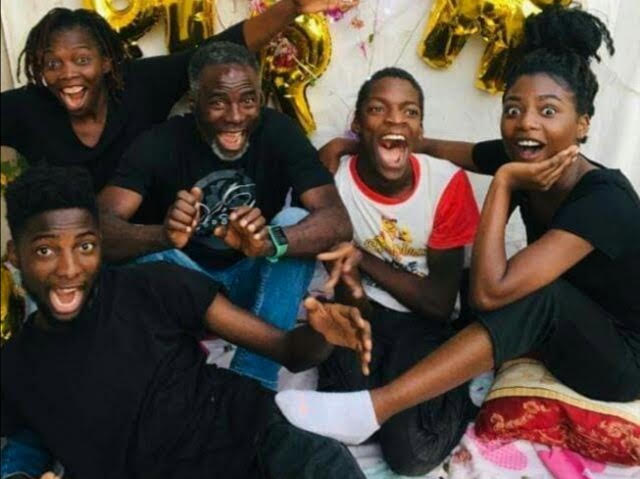
Adventurous, Fun-loving.
Barbra: A gift; fun, deep/strong.
More from Southern African Churches of Christ
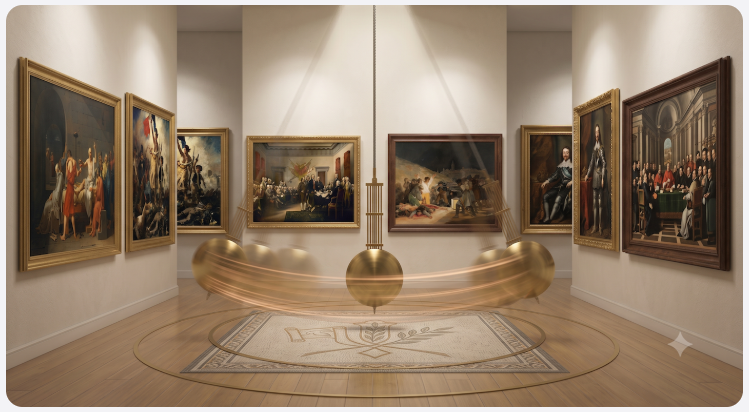
The physics of the pendulum Picture an old grandfather clock in a quiet hallway. Its long brass pendulum swings steadily: tick, tock, tick, tock. Now give that pendulum a hard shove to the right. It does not simply glide back to the center and stop. It races right past the middle and sways just as far to the left. Left to its own momentum, a pendulum never rests at either extreme; it finds peace only when it hangs still at the center, held by gravity and its fixed point. The church behaves in much the same way. Push her too far toward one side of a truth and she does not gently settle into balance, she swings. Often for a whole generation toward the opposite error, and then back again, wounding people at both ends of the arc. And here is the crucial thing the clock teaches us: the pendulum comes to rest not by being frozen in place, but by being held. Balance is not the absence of force; it is the fixed point that keeps opposing pulls in tension so that the weight can finally hang still.
Johannesburg church appoints Mpho and Pumla Khalo as evangelist and women's ministry leader. They serve in the Soweto region.
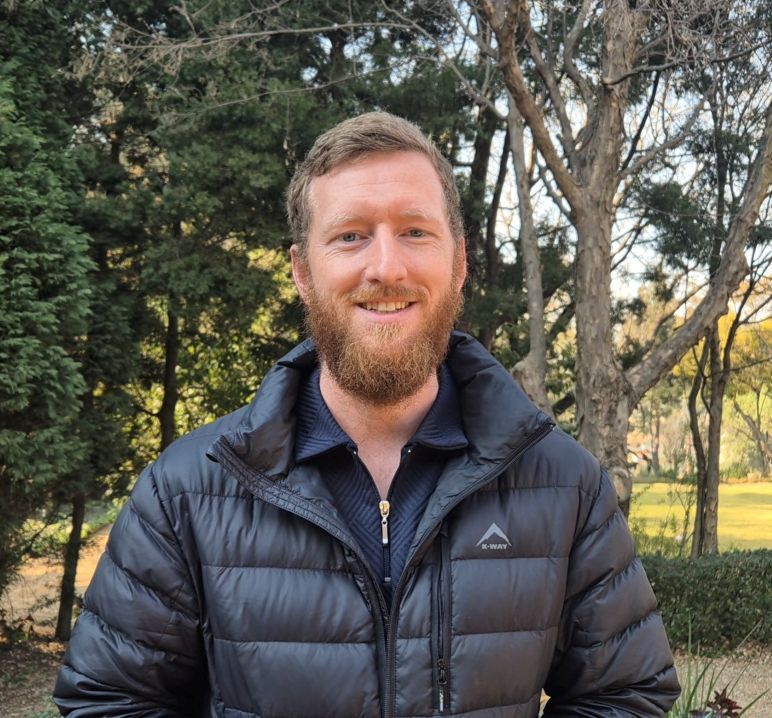
Campus minister Jake Graham shares about Johannesburg’s campus ministry and highlights Campus Encounter 2026 filled with teaching, fellowship and fun.