
Restoring Unity and Joy in marriage counselling workshop in Botswana
Justin Renton • July 13, 2019
Life can get in the way of creating and maintaining a united and joyful marriage. It was with this understanding that eight couples in the Botswana International Church of Christ, participated in a workshop to improve their marriage counselling skills.
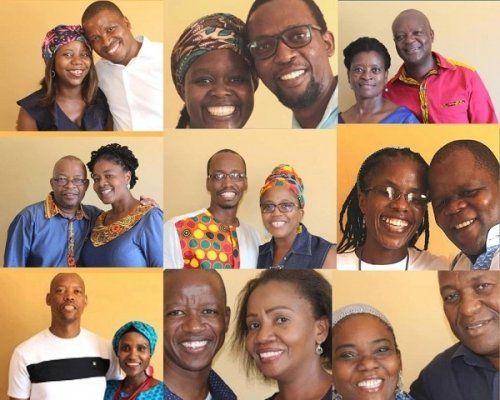
(Top, from left to right: Mogotsi and Audrey Mmutle, Moageledi and Ntokozo Monamati, Justin and Keamogetse Setlhare.
Middle, left to right: Bruce and Peggy Obusitse, Rapula and Kedibonye Malejane, Koorileng and Morwalela Kesalopa
Bottom, left to right: Kagiso and Tshegofatso Dichi, Tebogo and Theriso Matebesi, Lame and Olebogeng Gare)
The Restoring Unity and Joy In Marriage workshop was created by Mike and Daphne Renton who are members of the Cape Town Church of Christ. The Rentons used the book, I Choose Us by John and Karen Louis (leaders in the South-East Asia region of churches), as a resource because of its emphasis on self-discovery through the schema therapy concept.
Rapula and Kedibonye Malejane, who lead the Botswana International Church of Christ, were trained by the Rentons to facilitate counsellor training. The eight couples had an induction session in November 2018 and the actual training took place over the weekend of March 8-10.
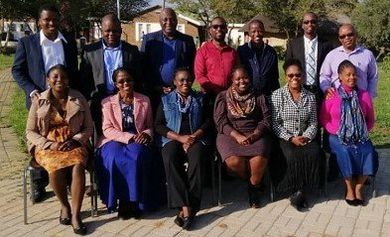
The feedback from the couples who were trained was amazing. They reported that the counselling gave them opportunities to learn new skills, and to identify and find solutions to mistakes they had become accustomed to making. Some said that the real life counselling scenarios gave them opportunities to get learn and see where the issues in their own marriages lie.
This is what some said:
"It gave me the opportunity to reflect on my own marriage. I learnt that situations that came as problems in my marriage are a result of my upbringing and an unresolved past."
"The material is an eye opener for me. It made me reflect on my past counselling sessions, prior mistakes were identified and I welcome the way forward on how to deal with similar issues in the future."
"Saving my marriage is very important to me, the skills attained will go a long way in achieving that."
"It helped me see my weaknesses in counselling, for example, taking sides."
The workshop was very timely and two couples in the community are already getting help in restoring joy and unity in their marriages, while three other couples have also signed up.
Government statistics for 2017 recorded 170 divorces between the period of January to September, an average of 19 per month, and that is cause for concern in a country with a population of just over 2,2 million people.
Please pray that more marriages in Gaborone and the rest of Botswana can profit from the counselling skills of these eight couples.
More from Southern African Churches of Christ
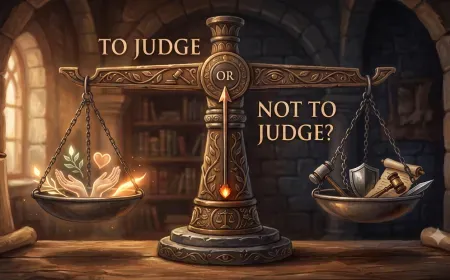
Imagine you are at a neighborhood barbecue. Your new neighbor arrives late, dressed casually, and barely speaks. Someone whispers, “She thinks she’s too good for us.” You feel the quick sting of that snap judgment. Later, you learn she just lost her husband and is quietly grieving. In that moment, you sense the discomfort of judging wrongly, a rush to conclusions that harms relationships and reveals more about our own hearts than the other person. Yet, the same evening, when another guest makes a racist joke, you feel an inner nudge to speak up. Is that also “judging”? This everyday tension captures what Jesus presents in Scripture: a divine balance between grace-filled restraint and righteous discernment. The two commands in tension “Do not judge, or you too will be judged.” – Matthew 7: “Stop judging by mere appearances, but instead judge correctly.” – John 7:24 At first glance, these seem contradictory. Don’t judge. Judge correctly. Which is it? Matthew 7 warns against a critical, hypocritical spirit that condemns others while ignoring our own faults. The context continues: “For in the same way you judge others, you will be judged, and with the measure you use, it will be measured to you” (Matthew 7:2). Jesus then uses the vivid image of someone with a plank in their own eye trying to remove a speck from another’s. Notice the aim: “then you will see clearly to remove the speck.” Self-examination is not a reason to stay silent. It is how we become safe enough to speak (Matthew 7:3-5). John 7, however, shows Jesus defending his healing on the Sabbath. He challenges the religious leaders: stop superficial, appearance-based judgments and instead apply right, truthful judgment aligned with God’s character and Word. This is not a contradiction but a divine tension, two truths that must be held together. We are called to humility and self-examination (do not judge harshly or hypocritically), while also exercising discernment and moral clarity (judge correctly, according to truth). Christianity rejects both naive permissiveness (“anything goes, no one can say anything”) and harsh legalism (constant condemnation without grace).

Welcome CJ and Sheree Wakefield to Cape Town! With decades of ministry, leadership and teaching experience, they are passionate about forming apprentices of Jesus.

Here are answers to some frequently asked questions about next year’s trip to Mt. Kilimanjaro.