
An African 'Apollos' from Nacala, Mozambique
Justin Renton • July 31, 2019
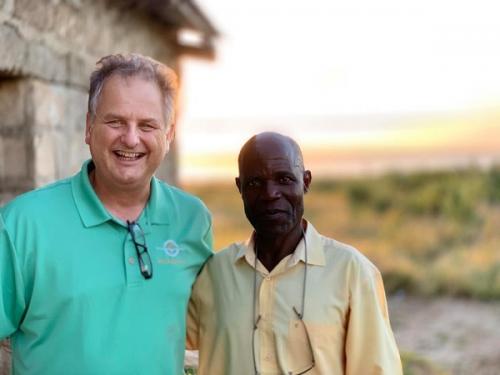
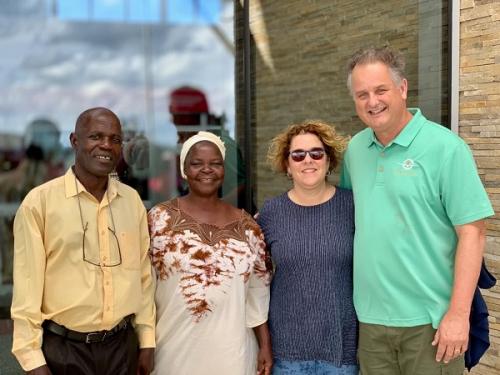
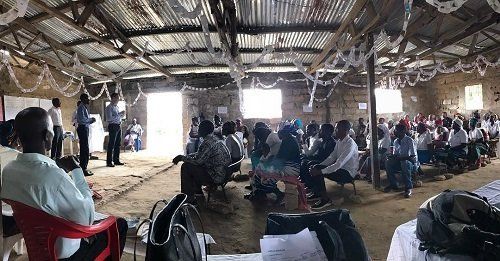
An incredible story of faith... 30 years in the making... During the month of June, a small team of disciples from South Africa, the US and Brazil traveled to Nacala, northern Mozambique, to strengthen Elias and his wife Angelina, a couple who lead a congregation of around 800 members. During the weeklong stay, 17 people were baptised, and this number has now grown to 20. How did this come about? This remarkable story started over 30 years ago. Below is an edited version written by Leslie De Morais, on how events unfolded...
A Miraculous Letter in the Mail
Back in 1987, Mike and Anne-Brigitte's full attention was focused on leading the church recently planted in São Paulo, Brazil by the New York International Church of Christ. One day, a letter arrived from northern Mozambique. The letter was from a young pastor in the province of Nampula, who was trying to confirm the existence of other churches of Christ. A rumor was circulating in his then-rural location that their church in Mozambique was the only one left of its kind. He couldn't believe it! So, he sat down and began writing letters to South Africa, Angola, Zimbabwe, Malawi, England, Switzerland, Brazil and the United States, all the countries he could think that might have a Church of Christ. He wrote letters asking each leader of the church to let him know of their existence. He simply addressed the letters to the leader of the church in each city. No address. Just "Church Leader," "Church of Christ," and the city and country.
In what must have been a miracle of God, in a city of more than 18 million people, one of the letters somehow reached the Taliaferros in São Paulo.
Elias, the letter's author, was an enthusiastic pastor. In his teenage years he became a central figure in his church, because he was the only one there, at the time, who could read. So, at age 15 he began preaching the Word to his community. Years later, when certain members in his congregation stirred up some controversies, he wrote his letters and posted them. A single response to his inquiry came from Mike Taliaferro.
The only way I can even fathom how the letter reached Mike and Anne-Brigitte is due to the fact that some diligent postal employee performed some pretty impressive investigative work and got that letter delivered.
A Friendship Begins
Mike began to correspond with Elias, assuring him that there were other churches of Christ and explained some basic principles of discipleship to him. At some point, Mike suggested Elias to travel from Nacala, his home town, to Maputo to meet with the leader of our Johannesburg, South Africa, congregation. Mike wired money to pay for Elias' bus trip and hotel stay. Due to a miscommunication, Elias traveled to Maputo before the meeting had been confirmed. He waited there for a month. Without phone or email, it was impossible to communicate. Sadly, Elias returned to Nacala only to find he had lost his job. Undeterred, he and his wife Angelina decided to grow and sell vegetables to support themselves and their children.
During this time, Mike and Anne-Brigitte had been asked to begin a new chapter in their lives by leading the mission work in all of sub-Sahara Africa. They left Brazil for the US in preparation of the next big challenge in their lives and in doing so lost contact with Elias.
Technology Revives the Communication
Fast forward to 2017. In the time that had elapsed, Elias shepherded the church in his city and as well as visited, maintained and spread the Word of God to 36 groups in surrounding districts. He had an old car back then that took him and Angelina on their missions, until the car broke down and he was financially was unable to repair it. The lack of funds restricted Elias' evangelism to the nearly by villages and today he and his wife focus on only six congregations. Elias had never forgotten Mike nor the teachings he had received via Mike's letters. One day, he thought, "I wonder what ever happened to my friend, Mike." He decided to look him up on the internet. Yes, the internet had reached even the small towns in the north of Mozambique.
Information about Mike appeared instantly, almost magically, and Elias rejoiced at finding him again after so many years. They began to e-mail one another, and Mike put Elias in touch with Araujo Francisco, the evangelist for the Maputo church of Christ at the time.
The Perfect Spiritual Storm
Araujo arranged for Elias and Angelina to come to Maputo and meeting them was like reading a passage right off the pages of the New Testament. They are solid and integral people with a deep love for God. Their simplicity of heart and genuine desire to learn was inspiring. Elias brought a brief case with him that contained all the letters Mike had written him three decades ago. He shared his memories of traveling to Maputo. He spoke of the faithful way God had provided for him and his family all these years. He asked for help for his churches. Many of the members did not own Bibles, they were just too expensive. He asked for visits from brothers and sisters in the church in Maputo. After speaking with him and reading the few letters Mike sent, it became apparent that Elias had only received the initial part of the Good News, before losing contact with Mike. Elias and Angelina were teaching people about becoming followers of Christ as much as they knew how, but the full message about discipleship, repentance and baptism was lacking. Members were simply accepting Jesus into their hearts and none of them understood the daily applications and character changing transformations of true discipleship.
"Meanwhile a Jew named Apollos, a native of Alexandria, came to Ephesus. He was a learned man, with a thorough knowledge of the Scriptures. He had been instructed in the way of the Lord, and he spoke with great fervor and taught about Jesus accurately, though he knew only the baptism of John. He began to speak boldly in the synagogue. When Priscilla and Aquila heard him, they invited him to their home and explained to him the way of God more adequately". - Acts 18:24-26
With much prayer and great respect, several of us (including Juju and Júdia Rodrigues from Angola) began studying the Bible with Elias and Angelina. The couple from the north considered us brothers in the faith. So, we approached the studies from the point of view of let's compare what we both teach people we're trying to reach with the message of Christ. As Elias and Angelina came to the realization that our messages were different, an internal struggle ensued. Imagine what that would feel like. After a lifetime dedicated to giving your all, you discover your most basic concepts about salvation and the Christian purpose in life were incomplete. It is at times like these that only the scriptures and the Holy Spirit can convince individuals of the truth. We prayed and fasted for their hearts and the conclusions they would reach.
God saw the sacrifice and heard the prayers.
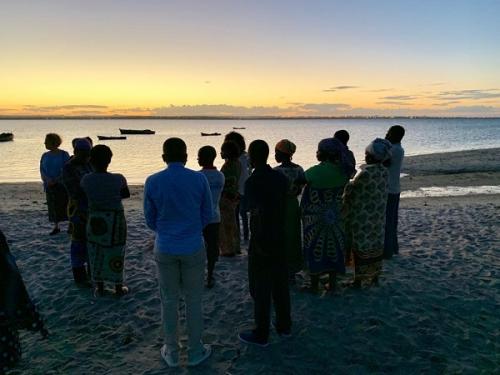
On Wednesday, July 25, 2018, at approximately 5:00 pm, 60-year-old Elias and his wife Angelina were baptized into Christ in the Indian Ocean on the beach in Maputo. This African "Apollos" was humble and grateful to finally receive the complete teaching that changed his and his wife's lives. They were eager to return to their city and restudy the Bible with the whole church... which they are presently doing.
And now...
Elias and Angelina returned to their city together with Claudio, a brother from Maputo who is originally from Nacala. He helped Elias find the most adequate way to speak to his congregation about the changes he made while in Maputo. The church responded with humility, just like their pastor, saying "If you, who are our teacher, saw the need to change, then so must we!" They are now studying the Bible, becoming true disciples and being baptized for the forgiveness of their sins.
The church in Maputo is developing a plan to send a mission team to the north to help Elias and Angelina shepherd this and their other churches.
Please keep them in your prayers!
More from Southern African Churches of Christ

The physics of the pendulum Picture an old grandfather clock in a quiet hallway. Its long brass pendulum swings steadily: tick, tock, tick, tock. Now give that pendulum a hard shove to the right. It does not simply glide back to the center and stop. It races right past the middle and sways just as far to the left. Left to its own momentum, a pendulum never rests at either extreme; it finds peace only when it hangs still at the center, held by gravity and its fixed point. The church behaves in much the same way. Push her too far toward one side of a truth and she does not gently settle into balance, she swings. Often for a whole generation toward the opposite error, and then back again, wounding people at both ends of the arc. And here is the crucial thing the clock teaches us: the pendulum comes to rest not by being frozen in place, but by being held. Balance is not the absence of force; it is the fixed point that keeps opposing pulls in tension so that the weight can finally hang still.
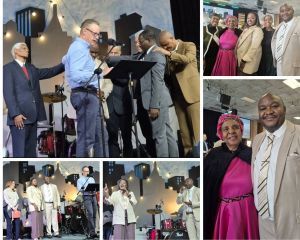
Johannesburg church appoints Mpho and Pumla Khalo as evangelist and women's ministry leader. They serve in the Soweto region.

Campus minister Jake Graham shares about Johannesburg’s campus ministry and highlights Campus Encounter 2026 filled with teaching, fellowship and fun.