
New Delegates Elected for the Southern Africa family of churches
Justin Renton • November 30, 2023

In 2006 Irene and I were asked by Oneychi & Deysi, the leaders of the Joburg church, to take on the task of leading the Southern African Family of churches. We were reluctant, feeling we were happily settled in Cape Town and busy with our current responsibilities, including raising our young children Elena and Luke, who were 6 and 3 at the time. After much prayer and advice, we packed our bags and moved to Johannesburg in January of 2007. What has followed has been the privilege of a lifetime, 17 years of planting and strengthening churches, and building friendships in the 12 countries of Southern Africa. We have seen God do amazing things and been privileged to baptise both our children into the body of Christ. We have had many late night and early morning prayers, seen 10 new Evangelists and their wives and 5 Teachers appointed as leaders in the church. 


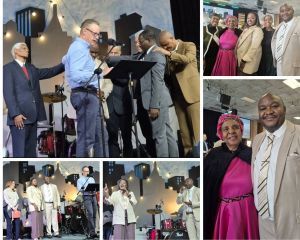
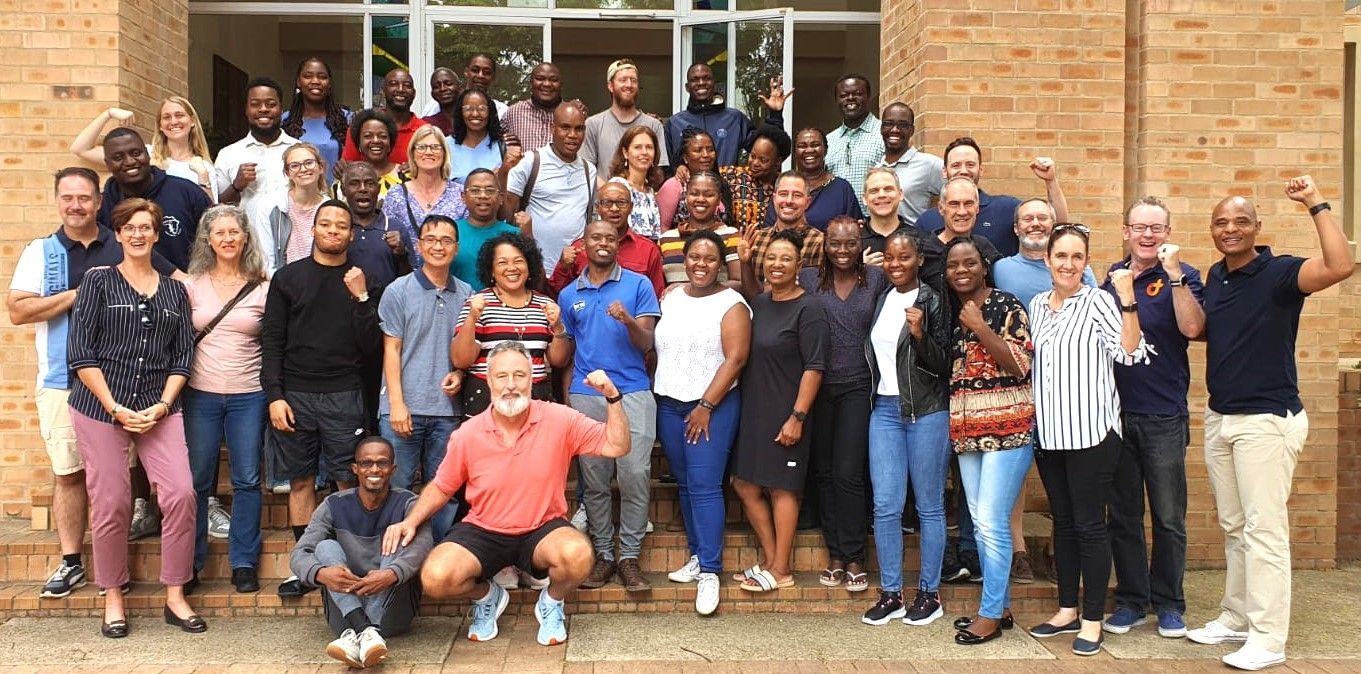
Over the past year we have worked with the Southern Africa Church leaders to adopt a new model for the leadership structures of our family of churches. You can read about it here, and we just completed our election process to choose new leaders to represent Southern Africa in our global fellowship. Edwin & Christine Shumba were chosen for the Regional Family Chair position, Anne-Marie Botha for the Women’s representative and Jacques Genis for the next generation candidate. Irene and I have worked alongside these men and women for multiple decades now and we respect and love them all deeply. They are worthy of our support and respect. (Hebrews 13:17)


Edwin & Christine Shumba (Regional Family Chair Couple)


Edwin and Christine were both born in 1970 in Masvingo and Harare, Zimbabwe respectively. They first came to the church in 1989 and they were baptised in the following year. Both of them were reached out to by disciples on the mission planting team to Harare.

Prior to joining the full-time ministry, they worked on corporate jobs in the accounting field for Edwin whilst Christine worked as a PA/Administrator in a non-governmental organization. In In 2010 an opportunity arose to utilize skills acquired from Edwin’s stint in real estate to establish their own construction company. They were called to serve in the full-time ministry in August 2015 in Harare, Zimbabwe and were appointed Evangelist and Women’s Ministry Leader in June 2019. Together they have served at various levels of leadership with singles, marrieds and the campus ministry in the Harare church.


Edwin and Christine have been married since December 1995 and they have three daughters, Rumbidzai (25 years), Laura (18 years) and Lisa (16 years). Edwin is a sports enthusiast who loves to watch and play soccer, basketball and occasionally swims and goes fishing whilst Christine loves to read and travel. They both love the outdoors.


It is a great honour for them to serve in this capacity and as they step out in faith, let us pray for God’s wisdom and His guidance. (1 Timothy 2:1-2)


Anne-Marié Botha (Women’s Representative Delegate)


Anne-Marié was born in Pretoria, and became a disciple of Jesus in October 1990. in 1991 she graduated from the University of Pretoria with a bachelor’s degree in occupational therapy.


In November 1991, she entered the full-time ministry and was sent to Cape Town as an intern. In 1992 and 1993 she co-led the church with Justin Renton. In 1994, after relocating to Johannesburg she married Ivor Botha. They have three wonderful children, ages 25, 23 and 16. The Botha’s have navigated various challenges with astonishing faith and resiliency (from 7 ministry relocations to being diagnosed with cancer twice and a heart attack necessitating double by-pass surgery). They have been involved in the discipling of leadership couples in many different churches in Southern Africa. 

They have also served in most aspects of the ministry: Youth Camp directors for 6 years, led campus and singles ministries, served as Kidzone coordinator, training and developing leaders and deepening family ministry.


Anne-Marié is currently doing a Masters degree in Christian Ministry and was the winner of the 2022 Teleios Student Paper Competition. She leads a group of sisters in Southern Africa who are passionate about the Teaching ministry and becoming better “handlers of the Word of truth” (2 Tim. 2:15).


Together with her husband, they are facilitators for “Good Enough Parenting” and “I Choose Us” family building courses. She is also passionate about Spiritual Formation and a Christian retreat facilitator.


Jacques Genis (Next Generation Delegate)


Jacques graduated with a BCom Honours degree in Organisational and Industrial Psychology at the University of Cape Town (UCT). He became a disciple as a second-year student in 2001 and was a part of the campus ministry in the Cape Town church. After graduating, he worked for a management consulting firm and later for a National Retailer in their Head Office in the Training and Development space with a project focus on developing the in-house Performance Management system. 


In 2007, Jacques entered the Full Time Ministry and served the church in Cape Town for 5 years before being asked to move to Johannesburg. Since 2013, he has been part of the leadership team of the North West Region of the Johannesburg church serving the Campus, Singles and Young Marrieds Ministries. He was appointed an evangelist in 2016. 


In partnership with the Beam Missions Foundation, and the Regional Leadership Team of Southern Africa, he designed the Southern African School of Missions (SASM) training program that has become a pathway for young leaders as they enter in to the full-time ministry. He currently serves as the Program Director for SASM and plays a role in recruitment, training, and development of young talent for the churches in the region. 


He has been married for 10 years to Laura and they have two beautiful children, Anzel (7) and Lincoln (6). 


Looking Forward


As the Southern Africa family of churches, lets hold up these couples’ arms and go into 2024 with faith in our mighty God that he works out everything according to his good, pleasing and perfect will (Romans 12:2). We look forward to even greater things in the decades ahead. 


Love in Christ


Justin & Irene Renton

More from Southern African Churches of Christ
By Justin Renton August 4, 2026
In the messy arena of human relationships, whether in marriage, the workplace, church family, or the volatile world of online discourse, we constantly feel the pull of opposing forces. One voice urges us to defend truth fiercely; another calls us to extend grace generously. This is the divine tension of disagreement: holding both conviction and compassion without letting go of either. Today, we turn to a passage that cuts to the heart of how we handle differences: “My dear brothers and sisters, take note of this: Everyone should be quick to listen, slow to speak and slow to become angry, because human anger does not produce the righteousness that God desires.” – James 1:19-20 (NIV) James, writing to scattered believers across the nations, doesn’t offer fluffy advice. He gives a practical, counter-cultural blueprint for godly relationships: Be quick to listen. Slow to speak. Slow to anger. These aren’t suggestions for better conversations; they are directives for producing the righteousness God desires. This passage applies to husbands and wives, children and parents, bosses and workers; everyone from the pulpit to the pew. We all need to train ourselves to be better listeners. The divine tension in James’ command Here lies the tension: Listening requires humility and self-control, while speaking (especially in defense of truth) feels urgent. Anger can arise when we perceive injustice or error, yet James holds these in balance. We must lean into listening first, restrain our tongues, and guard our hearts against hasty wrath. Why? Because “human anger does not produce the righteousness that God desires.” This isn’t a ban on all anger; Jesus displayed righteous anger in the temple (John 2:13-17). But human anger, tainted by our flesh, tends toward self-justification, escalation, and sin. It rarely births the fruit of the Spirit. The tension calls us to slow down enough for the Holy Spirit to lead, rather than our adrenaline. What science reveals about anger and “hearing” Modern neuroscience echoes what James knew by inspiration. When anger flares, our brain undergoes an “amygdala hijack.” The amygdala, the brain’s alarm system tied to fight-or-flight, floods the body with adrenaline and cortisol. This redirects resources: our heart rate spikes and oxygen flows to muscles for action, but our higher reasoning centers in the prefrontal cortex – responsible for judgment, empathy, and nuanced thinking – get suppressed. In this state, our ability to truly “hear” another person diminishes dramatically. Active listening, the tool that clarifies, disarms, and seeks understanding, becomes nearly impossible. We filter everything through threat detection, empathy drops, and we stop processing the other’s words for their actual meaning. Instead, while they are still speaking we start crafting rebuttals or counterattacks. This explains why conflicts escalate so quickly: we literally cannot hear well when flooded with anger. James’ call to be slow to anger is not just spiritual wisdom; it aligns with how God designed our brains to function best when governed by self-control rather than unchecked emotion. Recognizing our physiological limits isn’t about suppressing feelings, it’s about guarding our capacity for reason so we don’t accidentally sabotage the very justice we seek to defend. Even if the other person is operating out of a completely hijacked, high-emotion state, our calling to maintain self-control and clear thinking remains. When our prefrontal cortex goes offline, our hijacked brain defaults to intellectual shortcuts. This emotional flooding is precisely what predisposes us toward constructing caricatures, like the straw man, rather than engaging with the actual person.
By Justin Renton July 9, 2026
On June 6, 1944, Allied forces stormed the beaches of Normandy. In the brutal hours that followed, the course of World War II shifted permanently. The enemy’s capacity to win had been broken. And yet, the fighting raged on for 11 more months. Soldiers still died; cities still burned. Berlin had not yet fallen. But every Allied commander knew the truth: what happened on D-Day determined what would happen on V-E Day (Victory in Europe Day). Victory was certain, even though it was not yet complete. Through his death and resurrection, Jesus Christ stormed the ultimate beach. The decisive battle against sin, death, and darkness has already been won. And yet, we are not yet living in the full experience of that victory. The war is over, and the war is still going. Not because the outcome is in doubt, but because we live between D-Day and V-E Day. This pattern – already won, not yet complete – is the “already but not yet,” and it is not a contradiction. It is the very fabric of the Christian life. As we’ve seen across this series, the fullness of God’s truth is rarely found in tidy, isolated categories. It is held in divine tension, where seemingly opposing realities coexist, each completing and guarding the other. And nowhere is that tension more vivid than in what Scripture says about our own salvation. The Biblical paradox The New Testament speaks of our adoption, redemption, salvation, sanctification, and resurrection in a way that constantly surprises us: as both accomplished facts and future hopes. This is not a theological error; it is the deliberate structure of a story that is already finished by the Author but still being written by the characters. Adoption Already: “You have received the Spirit of adoption as sons, by whom we cry, ‘Abba! Father!’” – Romans 8:15 Not yet: “We ourselves groan inwardly as we wait eagerly for adoption as sons, the redemption of our bodies.” – Romans 8:23 Redemption Already: “In him we have redemption through his blood, the forgiveness of sins.” – Ephesians 1:7 Not yet: “You were sealed for the day of redemption.” – Ephesians 4:30 Salvation Already: “For it is by grace you have been saved, through faith.” – Ephesians 2:8 Not yet: “How much more shall we be saved from God’s wrath through him!” – Romans 5:9 Sanctification and resurrection Already: We are already sanctified in Christ and raised with him. – 1 Corinthians 1:2 and Ephesians 2:6 Not yet: We await final sanctification and the future resurrection of the dead at the last trumpet. – 1 Thessalonians 5:23–24 and 1 Corinthians 15:52 The same salvation is being described as past, present, and future. We have been saved. We are being saved. We will be saved. This is not a contradiction, it is the both/and of divine tension. Understanding the timeline To make sense of this, we need to understand how Scripture structures history. Jewish thought divided all of time into two ages: “This age” — the present age marked by sin, suffering, and death — and “the age to come,” when God would restore all things, defeat evil, and reign in fullness. The expectation was that these two ages would be strictly sequential: this age ends, the next one begins. What no one fully anticipated was that through the resurrection of Jesus and the outpouring of the Holy Spirit, the “age to come” broke into “this age” before it was over. We now live in what theologians call “the age between the ages.” The Kingdom of God has arrived, and it is still arriving.
By Justin Renton June 1, 2026
In every major conflict, whether political, personal, or spiritual, there is almost always a sliver of validity on both sides. Grievances are real. Injustices are felt. Leaders on the “wrong” side can even articulate legitimate frustrations.
Show More