Leading a Campus Ministry
The Southern Africa School of Missions Programme
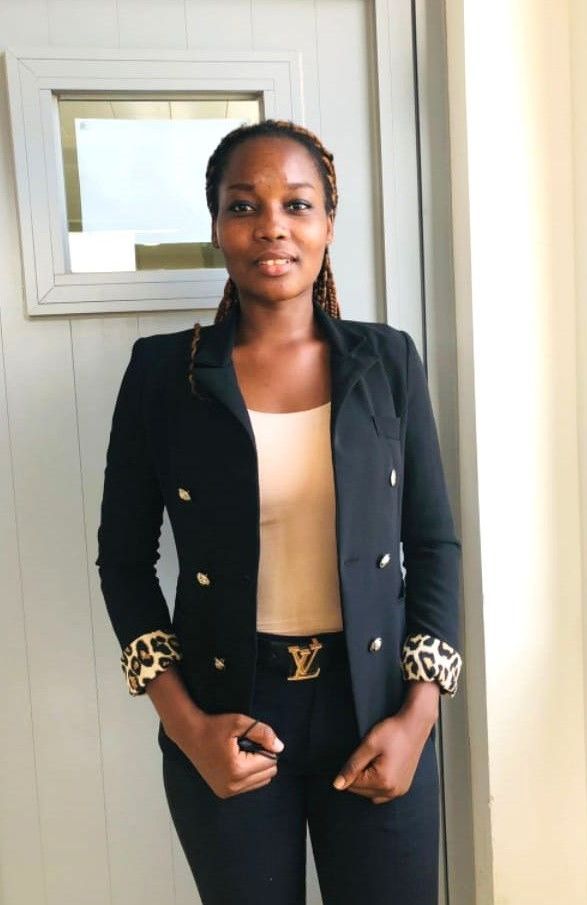
Thandie Machoe is in her second of a three-year programme in the Southern Africa School of Missions (SASM) and enjoys serving in the campus ministry in Maputo, Mozambique. She shares about her experience and what she’s learnt so far:
“I became a follower of Jesus six years ago. The pastor of my church invited me to become part of the SASM. I accepted because I’ve always dreamt of serving God in a missionary role. At the time, I was working in my field of training (marketing and public relations) as a telemarketer. It was a job I loved very much and one I’d prayed for, so it was difficult for me to make a decision. But I accepted the SASM opportunity as it allowed me to serve God full-time.
I started the SASM programme in 2022 and expected to be busy all day, from Monday to Saturday, with Bible studies, baptisms, and SASM classes. I thought I’d never get weak spiritually because I’d be busy with tasks that feed the Holy Spirit in me.
But, in practice, these expectations didn’t materialise. This was a big challenge for me. I’d share my faith with many people, but when it was time for Bible studies, few would commit, or they’d postpone it for another day. Then I’d feel guilty, as if I was not doing my duty. And even though it wasn’t demanded, I’d put pressure on myself to produce baptisms. But I learnt results don’t depend solely on my own efforts.
The SASM training allowed me to understand the Bible better and how to lead the campus ministry. I’ve also enjoyed the opportunity to learn from the campus ministry in South Africa. It’s been revolutionary because I broadened my knowledge and horizons.
One of the highlights so far, was the baptism of Carolina, a student who met me on the Eduardo Mondlane University campus while I was busy leading a Bible study with someone else. At the end of the study, she approached us and expressed an interest in studying the Bible. We baptised her sometime later.
Her baptism showed me that it’s God who convicts people of sin, and that Jesus is with us as we make disciples, just as he promised. And that I need to rely on God and not on my own understanding. It was clear that it is God who convicts and grows His Word in people.
Through the SASM, I’ve studied modules such as apologetics, spiritual leadership, hermeneutics, and church history. I’m also learning how to lead a campus ministry. I’m convicted to use every opportunity to be involved in saving souls and spreading the gospel, whether I’m serving full-time in the church or not.
I recommend SASM to other young leaders because it’s an amazing opportunity to grow spiritually and to help others in God's plan for salvation. You also get to know yourself better and understand that your calling is serving the Lord.
The greatest lesson I’ve learnt is to always do my part in spreading the gospel, whether it’s accepted or rejected. My mission is to announce the kingdom of God to as many people as I can. If they don’t show any interest, I should still continue to share with others.
As for the next step for me as a young leader, God knows best. What I do know is that I’m willing to live my life to serve the Lord. For me, my life has meaning only when I serve God and seek to glorify Him.”
More from Southern African Churches of Christ