Meet Roma and Hanta, leaders in Madagascar
Vida Li Sik • May 29, 2021
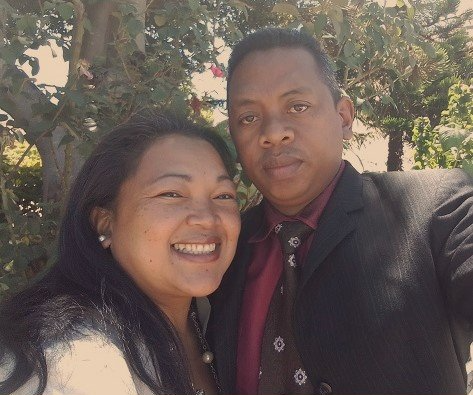
When people hear the name Madagascar, they think of the animated movie, but there is more to this island than the endangered lemurs. With a population of just under 27 million, Madagascar is the second-largest island country in the world, yet one of the poorest nations. The church in the capital Antananarivo (Tana) comprises 28 members—14 men and 14 women; they grew by four in the last couple of years. We spoke to part-time leaders Roma and Hanta Randrianavelona, who’ve been taking care of the church since 2011.
How is everyone doing?
Madagascar is now amid the second wave of the Covid-19 pandemic just as winter is starting. There is limited access to vaccines, while the price of medicines has increased. Currently, four of our members and their family are on treatment and they’ve been in lockdown for weeks, but they are slowly recovering. Seven members of the church who worked in the snack and restaurant industry, and education, lost their jobs as a result of the pandemic.
What challenges are you facing?
Because of the virus, we’ve had to stop in-person meetings since early April and have online services, fellowship and prayer groups on social media. However, many of our members have a difficulty connecting with the group—some don’t have smartphones and cannot afford access to the Internet.
How did you become involved with the church?
The church was planted in 1997. Hanta was baptised in 1998 and assisted the mission team leaders from 2000 to 2005. I (Roma) was baptised in 1999 on campus while a third-year student at the Faculty of Science at the Antananarivo University. I led the campus ministry from 2000 and assisted HOPE worldwide
with community outreach activities.
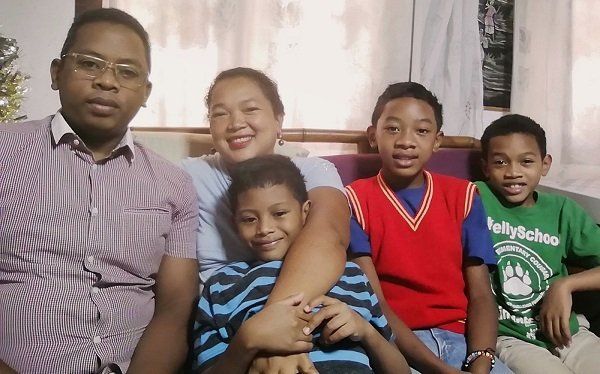
The two of us “grew up” in the church, started dating in 2003, led the singles ministry together from 2004 to 2006, and got married the following year. We now have three boys aged 12, 10 and eight years old. I started working part-time for the church in 2016 and Hanta in 2019.
What is your dream for the church on the island?
We are praying that we will continue to grow this year as we are studying the Bible with some people despite the limitations caused by the pandemic. We love the church so much, and have dedicated ourselves not only to serve in the ministry but to increase our knowledge of God and His word. We’ve been fortunate to attend ministry training in South Africa in the past, and enrolled in courses with the Athens Institute of Ministry last year. Our fervent dream is to raise up the next generation of young leaders, and to expand the church beyond Tana into the five other provinces of Madagascar.
Please pray for the growth and safety of the church in Tana.
Below: Roma and Hanta with their boys.
More from Southern African Churches of Christ

Imagine you are at a neighborhood barbecue. Your new neighbor arrives late, dressed casually, and barely speaks. Someone whispers, “She thinks she’s too good for us.” You feel the quick sting of that snap judgment. Later, you learn she just lost her husband and is quietly grieving. In that moment, you sense the discomfort of judging wrongly, a rush to conclusions that harms relationships and reveals more about our own hearts than the other person. Yet, the same evening, when another guest makes a racist joke, you feel an inner nudge to speak up. Is that also “judging”? This everyday tension captures what Jesus presents in Scripture: a divine balance between grace-filled restraint and righteous discernment. The two commands in tension “Do not judge, or you too will be judged.” – Matthew 7: “Stop judging by mere appearances, but instead judge correctly.” – John 7:24 At first glance, these seem contradictory. Don’t judge. Judge correctly. Which is it? Matthew 7 warns against a critical, hypocritical spirit that condemns others while ignoring our own faults. The context continues: “For in the same way you judge others, you will be judged, and with the measure you use, it will be measured to you” (Matthew 7:2). Jesus then uses the vivid image of someone with a plank in their own eye trying to remove a speck from another’s. Notice the aim: “then you will see clearly to remove the speck.” Self-examination is not a reason to stay silent. It is how we become safe enough to speak (Matthew 7:3-5). John 7, however, shows Jesus defending his healing on the Sabbath. He challenges the religious leaders: stop superficial, appearance-based judgments and instead apply right, truthful judgment aligned with God’s character and Word. This is not a contradiction but a divine tension, two truths that must be held together. We are called to humility and self-examination (do not judge harshly or hypocritically), while also exercising discernment and moral clarity (judge correctly, according to truth). Christianity rejects both naive permissiveness (“anything goes, no one can say anything”) and harsh legalism (constant condemnation without grace).

Welcome CJ and Sheree Wakefield to Cape Town! With decades of ministry, leadership and teaching experience, they are passionate about forming apprentices of Jesus.

Here are answers to some frequently asked questions about next year’s trip to Mt. Kilimanjaro.