
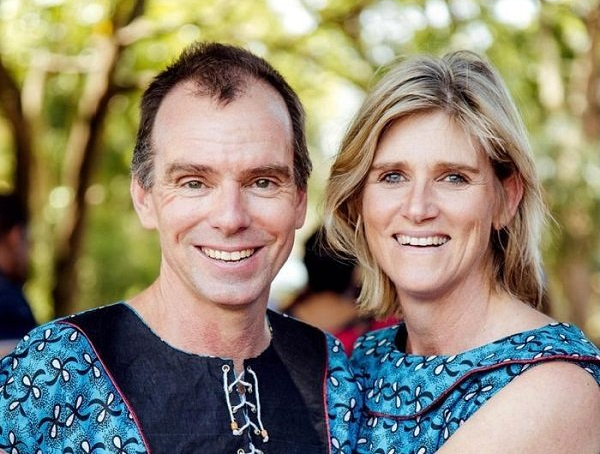
Down by the sea—Meet Duncan and Lisa Comrie, leaders of the Durban church
Vida Li Sik • June 16, 2021
'A common goal and helping as many people as possible'
How did you become disciples of Jesus?
Lisa:
Duncan and I had just gotten engaged, and went on a working, adventure holiday, something we wanted to do before we got married. While living in London we were invited to church by a young couple who were also engaged. We were baptised together on 7 June 1991. We were blown away by what we learned in the Word of God, and finding out how God wanted us to live as his disciples. We were also so inspired seeing the diversity of the London church. We had never experienced black and white people being together and being friends.
When did you start leading the church in Durban?
We led the mission team that started the Durban church in December 1994. In October 1998, we left the farm where Duncan was working with his dad, and entered the full-time ministry. This took us to Joburg for eight years, and we returned to Durban in December 2006. The church had gone through a lot and was limping. God continues to strengthen us, as we pray and work hard on our vision to be an awesome family at a church that is diverse and deep in relationships.
Kwazulu-Natal is host to arguably the world's greatest endurance race, the 89km (56 miles) Comrades Marathon that's run between Durban and Pietermaritzburg, and that around 10 000 runners complete. What lessons can we learn from it in our spiritual race as disciples?
Duncan:
It's very sad that this epic race has had to be cancelled due to Covid. I've run the Comrades marathon twice, both “Up” runs from Durban to Pietermaritzburg which has many hills to climb! Two major spiritual lessons I have learnt: Firstly, life is an ultramarathon, not a sprint. The journey is full of ups and downs, twists and turns and learning endurance is a necessity. Secondly, the Comrades marathon levels the playing fields in that it is all cultures, races, classes, ages, occupations and both genders and the common goal is the race. You are there to get through and encourage those around you to make it. The finish is particularly thrilling to watch because it embodies the spirit of Comrades, as participants pull each other over the finish line in their desperation to get to the end before the gun goes off. This is the journey in Christ, a common goal and helping as many people as possible.
Lisa, you are passionate about mental health. How can disciples help one another during these challenging times?
I started studying Counselling because I saw a need to grow in how to help people navigate the emotional ups and downs of life. As disciples I noticed over the years that we put a lot of pressure on ourselves to be “fine” and “ok“ all the time. We worry about what people will think if we tell them we are falling apart. The reality is that even as disciples we cannot be fine all the time, we struggle and we are meant to struggle! Mental Health and Grief recovery are particularly close to my heart as I've had to navigate these issues personally.
In 2 Corinthians 1:4,
the Bible says, “He comforts us in our affliction, so that we might be able to comfort those who are in any kind of affliction, through the comfort we ourselves receive from God.”
This scripture has truly come alive for me and I'm passionate about helping people in and out of the church navigate mental health and grief. It is especially a need as we navigate this time during a pandemic. Mental health issues have risen remarkably and dealing with grief and often multiple grief scenarios is a reality. Christians can help each other by sharing vulnerably, not being afraid to get help, and then helping each other to look to God in the situation.
Both your daughters are disciples. What encouragement can you share with parents to help their children build their own relationships with God?
We are very privileged and blessed to have both our grown daughters who became disciples since they were 16. As parents, we wanted to show them God by our example … in the good and the bad! That meant we had to own our mistakes/sin and ask for forgiveness (we encouraged them as they got older to point out our faults …. and they did!); and it meant loving them unconditionally when they made mistakes/sinned. We worked very hard at being emotionally connected as a family and creating a home of vulnerability and safety while having a lot of fun in the process.
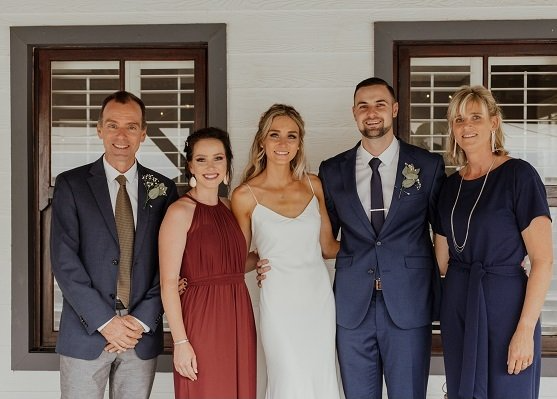
A new wonderful stage for our family is that our youngest daughter, Shelley, got married to Jade, so now we have a son! (in the picture below).
If you could choose a profession mentioned in the Bible, which one would it be and why?
Duncan: I was raised on a farm and farmed as a career before going into the ministry. I still read the Bible through the lens of a farmer as there are so many farming illustrations and terms, so I'd say that I would choose the occupation of farming. In the Ministry I see myself as farming for Jesus!
Lisa: I'd choose to be a fisherman as I consider my calling to fish for people a special privilege. I used to fish with my dad as a child and I loved those time with him. I see a parallel in helping God’s people and that he chooses me to be a part of his plan to do that.
More from Southern African Churches of Christ
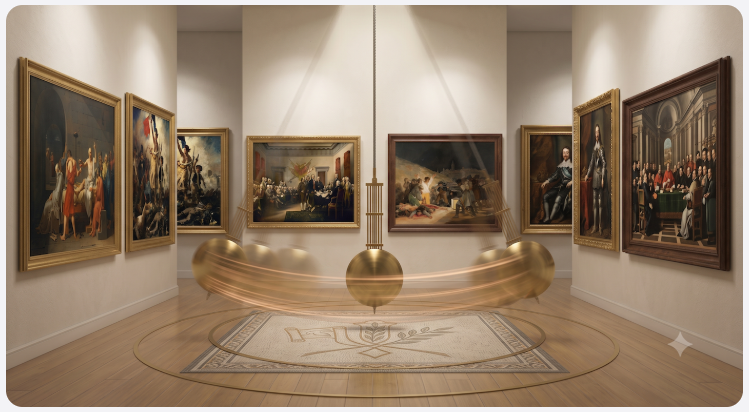
The physics of the pendulum Picture an old grandfather clock in a quiet hallway. Its long brass pendulum swings steadily: tick, tock, tick, tock. Now give that pendulum a hard shove to the right. It does not simply glide back to the center and stop. It races right past the middle and sways just as far to the left. Left to its own momentum, a pendulum never rests at either extreme; it finds peace only when it hangs still at the center, held by gravity and its fixed point. The church behaves in much the same way. Push her too far toward one side of a truth and she does not gently settle into balance, she swings. Often for a whole generation toward the opposite error, and then back again, wounding people at both ends of the arc. And here is the crucial thing the clock teaches us: the pendulum comes to rest not by being frozen in place, but by being held. Balance is not the absence of force; it is the fixed point that keeps opposing pulls in tension so that the weight can finally hang still.
Johannesburg church appoints Mpho and Pumla Khalo as evangelist and women's ministry leader. They serve in the Soweto region.
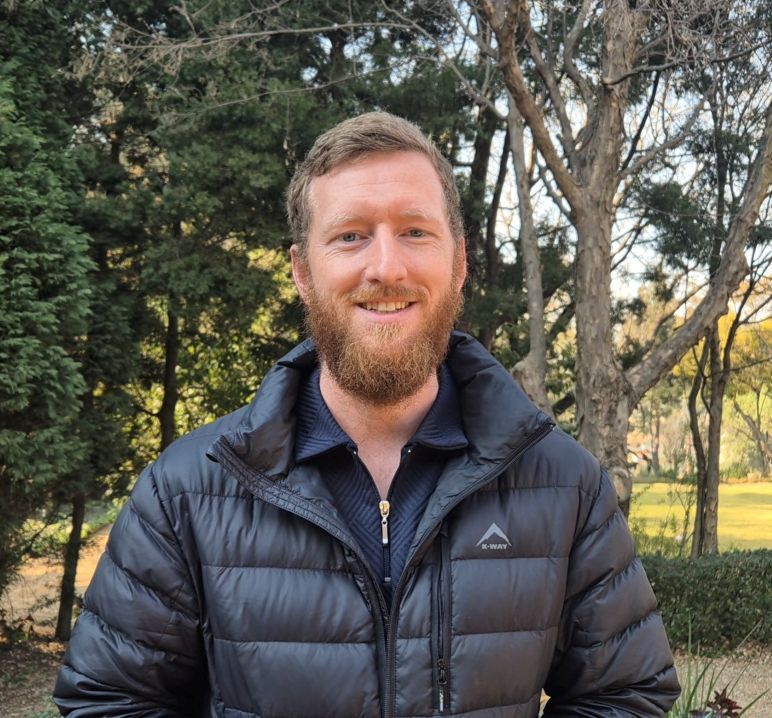
Campus minister Jake Graham shares about Johannesburg’s campus ministry and highlights Campus Encounter 2026 filled with teaching, fellowship and fun.