
Meet Rapula and Kedi – church leaders in Gaborone, Botswana
Vida Li Sik • March 4, 2021
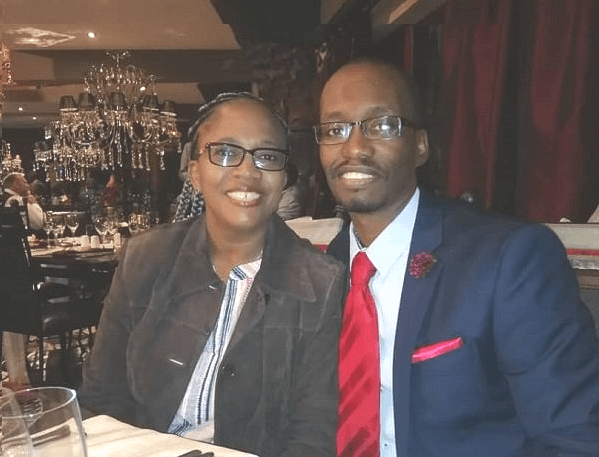
Rapula Malejane has been in the full-time ministry since 2016, while his wife Kedibonye (Kedi) works for HOPEww while overseeing the women’s ministry in the church in Gaborone, Botswana. It is a challenge to ensure all the members of the church are taken care of during the ongoing COVID-19 pandemic and to maintain fellowship amidst the restrictions in place. The country’s vaccination programme will only kick off at the end of March.
How and when did you become part of the church?
Rapula:
I was living on campus at the University of Botswana in 1996 and longed to find God and a church that truly obeys Him. I used to visit a church where there had been physical fights, and I felt they were not serious about obeying God. One weekend, I went shopping at a mall in Gaborone, where a member of the Botswana International Church of Christ invited me to a midweek service close to there. But I didn’t go because it was outside campus. Weeks later, I accompanied a relative to a store in town, and went to the music section while I waited. Just then, another brother invited me to a Bible talk on campus. I found that convenient enough, so I went. I started studying the Bible shortly afterwards and was baptised in June 1996.
Kedi:
My sister Miracle became a disciple while studying in London. She reached out to me by doing a crash Bible study in 1992 when she returned to Botswana for my brother’s funeral. A few months later, when I had just started studying at the University of Botswana, she and the late Joshua Diane took me through the conversion Bible studies. When I compared what I learnt to my lifestyle, I was very ashamed, even though I had thought all along that I was living out a Christian life. Every Bible study brought a new challenge, it was as if I was reading the Bible for the first time. They baptised me in April 1993.
What Bible verse convicted you the most during your Bible studies?
Rapula:
There wasn’t any specific Bible verse. Rather, one thing that convicted me was the way the members of the church lived out what they were learning from the Bible. My favourite Bible verse for years now has been John 12:24 “Very truly I tell you, unless a kernel of wheat falls to the ground and dies, it remains only a single seed. But if it dies, it produces many seeds.”
Kedi:
There wasn’t a particular scripture, but it was the Light & Darkness study. It was sobering to realise that I’d been lying to myself, thinking I was on the right path.
If you could ask a question from any character in the Bible, who would that be and what would be your question?
Rapula:
One of my favourite people is Joshua, son of Nun. I would ask him to describe the journey under the leadership of Moses. Then I’d ask him to describe the leadership transition from Moses to him and beyond that.
Kedi:
David. I would ask how he kept it real with God, and why he thinks God considered him a man after His own heart.
What three words would you use to describe the church in Gaborone?
Rapula:
Searching for truth.
Kedi:
Resilient. Passionate. Family.
What is your favourite family activity?
Rapula:
Traveling together.
Kedi:
Traveling to unknown places or just being on vacation, collecting memories together.

More from Southern African Churches of Christ

Imagine you are at a neighborhood barbecue. Your new neighbor arrives late, dressed casually, and barely speaks. Someone whispers, “She thinks she’s too good for us.” You feel the quick sting of that snap judgment. Later, you learn she just lost her husband and is quietly grieving. In that moment, you sense the discomfort of judging wrongly, a rush to conclusions that harms relationships and reveals more about our own hearts than the other person. Yet, the same evening, when another guest makes a racist joke, you feel an inner nudge to speak up. Is that also “judging”? This everyday tension captures what Jesus presents in Scripture: a divine balance between grace-filled restraint and righteous discernment. The two commands in tension “Do not judge, or you too will be judged.” – Matthew 7: “Stop judging by mere appearances, but instead judge correctly.” – John 7:24 At first glance, these seem contradictory. Don’t judge. Judge correctly. Which is it? Matthew 7 warns against a critical, hypocritical spirit that condemns others while ignoring our own faults. The context continues: “For in the same way you judge others, you will be judged, and with the measure you use, it will be measured to you” (Matthew 7:2). Jesus then uses the vivid image of someone with a plank in their own eye trying to remove a speck from another’s. Notice the aim: “then you will see clearly to remove the speck.” Self-examination is not a reason to stay silent. It is how we become safe enough to speak (Matthew 7:3-5). John 7, however, shows Jesus defending his healing on the Sabbath. He challenges the religious leaders: stop superficial, appearance-based judgments and instead apply right, truthful judgment aligned with God’s character and Word. This is not a contradiction but a divine tension, two truths that must be held together. We are called to humility and self-examination (do not judge harshly or hypocritically), while also exercising discernment and moral clarity (judge correctly, according to truth). Christianity rejects both naive permissiveness (“anything goes, no one can say anything”) and harsh legalism (constant condemnation without grace).

Welcome CJ and Sheree Wakefield to Cape Town! With decades of ministry, leadership and teaching experience, they are passionate about forming apprentices of Jesus.

Here are answers to some frequently asked questions about next year’s trip to Mt. Kilimanjaro.