
Teen Views on the Pandemic
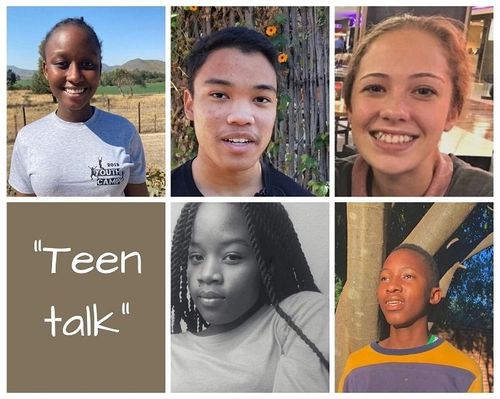
We live in unprecedented times and the COVID-19 pandemic is affecting people of all ages. We chat to five teens from Harare, Zimbabwe, and Johannesburg, South Africa, about the “new normal”. Zanele, Jordan, Keren, Tinotenda and Unathi share their views.
How has the pandemic changed the way you live – positively and negatively?
Zanele: It has forced to me to build a strong relationship with my family and helped me realise that they’re the only family I have. It’s also made me more antisocial because I don't interact with other people outside of home as much as I used to.
Jordan: I've been able to see which friends matter to me and which friends have just been there to keep me company. This has allowed me to focus on the relationships that are healthy and helpful.
Keren: “I got to spend more time with my family. I’ve learnt a lot about each one of them and my sisters and I have definitely grown closer! I’ve also realised how much of a procrastinator I am!
Tinotenda: I can’t hang out with my friends in person, but it has also allowed me to spend more time with my family.
Unathi: It has paved way for me to move steadily in reading and studying the Bible. It’s helped me explore different social media platforms and opened my eyes to God’s blessings. But, it has also dented how I communicate with friends because I don’t own an electronic device.
What has helped you cope?
Zanele: I think talking a lot more about how I'm feeling emotion-wise, and a lot of prayer and meditation has helped me cope.
Jordan: I've turned to my good friends to talk and share how the pandemic has affected us, as well as to catch up every now and then. I’ve also turned to music and meetings on Zoom with my Bibletalk.
Keren: Calling friends.
Tinotenda: My family.
Unathi: My faith, and knowing there are better days to come. School is also a good distraction.
What is the message of encouragement you'd give to yourself and other teens during this time?
Zanele: Put all your hope in God, because like he said in Jeremiah 29:11 he has plans for you and he knows them very well; he will never put anything on your table that he knows you can’t handle.
Jordan: Dig deep within yourself; keep your chin up and your eyes up.
Keren: Don’t lose hope. Although this pandemic sucks and we don’t get to see our friends, it will be over sooner or later (hopefully sooner). All we can do it go with the flow because it is what it is and we can’t change that.
Tinotenda: Tough times never last, only tough people do.
Unathi: God loves you. He always has and always will. We don’t have to do anything to deserve it. He calls us to always come back to him, no matter how bad you think you are or how many times you’ve wronged him.
More from Southern African Churches of Christ