Spiritual lessons from the Comrades Marathon
From those who've done it...
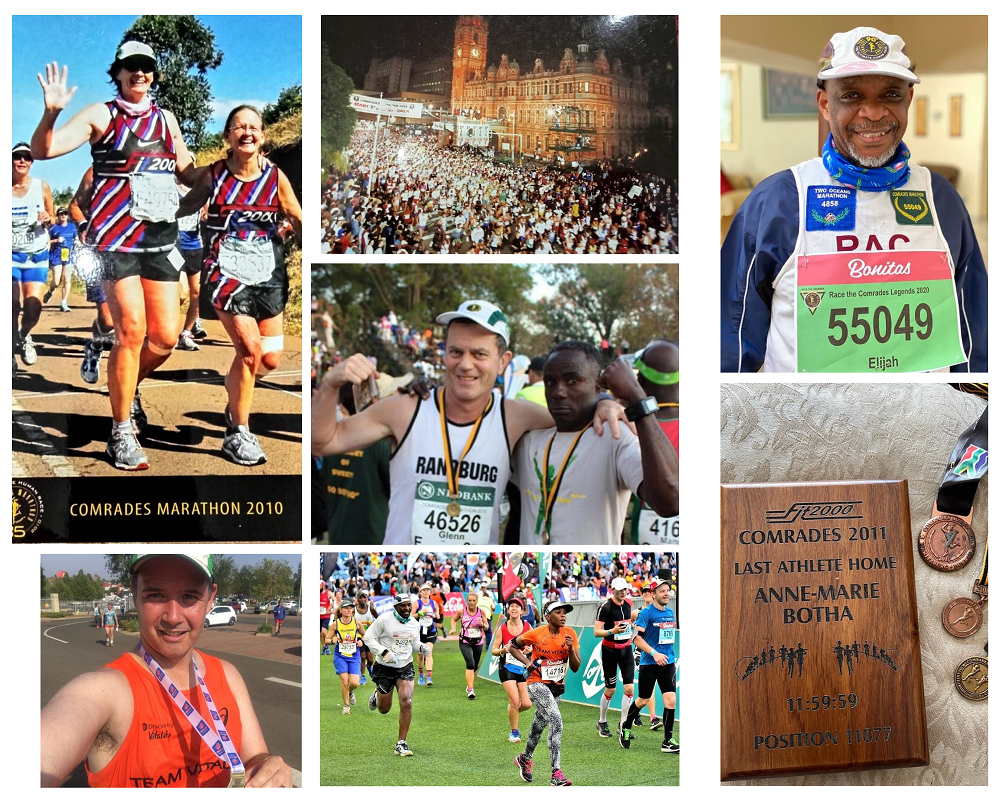
As we applaud all who ran in the 2022 Comrades Marathon between Pietermaritizburg and Durban, we asked a few members of our church to share spiritual lessons they’ve gleaned from participating in what's known as “The Ultimate Human Endurance”. This ultra-marathon stretches over 89.9km and alternates between an "up" and "down" race between the two cities. Not many who entered started, and not all who ran finished the race. It is no different in the spiritual race towards heaven. That's why it's important to know what it takes to make it to the end.
Dr Elijah Nkosi: has completed 10 Comrades marathons and proudly wears a green number that attest to his achievement.
What it requires: “The Comrades is similar to our spiritual journey that requires faith that requires sacrifice, diligence and denial of self. Pushing yourself beyond your limit at times. To qualify for the Comrades, you need to complete a marathon (42km) in less than 4hrs and 50 mins. It’s challenging physically and mentally.
It’s not a solo journey: The most difficult part is the preparation for the final day— what I call 'judgement day'. It’s not a solo journey; you have to be a member of a club to run it. Secondly, for you to succeed, you train as a group. It’s like fellowship where you spur each other on. You train four to six times a week as part of your preparation. All this is part of your prep for the “day of judgement”.
Encouragement from others: The crowd that carries you through to the finish as they cheer you on from the start. For you to get a “crown” or medal you have to finish within 12 hours. This is similar to what we do as Christians. For us to keep the faith we require perseverance, fellowship, diligence, sacrifice and denial of ourselves. These are critical factors that enable us to succeed and finish this race.
In the Bible (2 Timothy 4:7-8), Paul said to Timothy, “I have fought the good fight, I have finished the race, I have kept the faith. Now, there is in store for me the crown of righteousness which the Lord, the righteous Judge, will award me on that day. And not only to me but also for those who have longed for his appearing.”
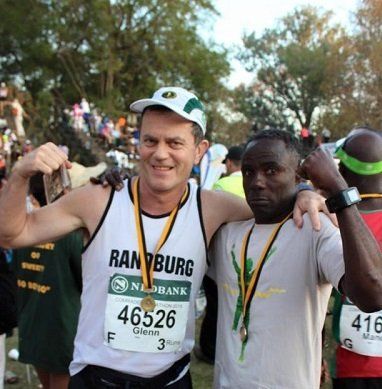
Glenn Harvey has six bronze finishes (the first at the age of 50).
Motivation: I’m a diabetic and I needed the motivation to put my training kit on five to six days a week. It was also a bucket list item and I discovered the daily training and comradeship was almost more enjoyable and beneficial than the race itself, so I just kept it going. I have a training book, Make Sure of your Comrades medal by Don Oliver, and I’ve followed it almost word for word in preparing for my Comrades races over the years.
Unforeseen challenges: You’ll experience unforeseen challenges during the race. Apart from the soreness and pain in your limbs during the second half of the race that you come to expect, something else will trouble you along the way that will get you to doubt your ability to get to the finish. I’ve experienced severe cramps in both my calves at about the halfway point of the race to the extreme where I became unable to walk any further.
Accepting assistance: This has happened in just about all my Comrades runs. Fortunately, the first time it happened I was able to ask advice and get assistance from a first aid worker who was stationed nearby, and she explained that the cramps were due to a natural chemical deficiency in the muscle. After she gave me a good dose of salt and water, I was able to start walking and running again within a few minutes. In the next races I made sure I never ran without carrying a good helping of salt that I could take when I felt the cramps starting.
Questioning your ability to finish: The Christian race is similar in that challenges will come our way along the way that will question our faith and our ability to finish the race as faithful disciples.
Jesus said in John16:33 “I have told you these things, so that in me you may have peace. In this world you will have trouble. But take heart I have overcome the world”). I believe if we train and equip ourselves in living righteously as disciples, we stand a better chance to overcome the challenges that life and the world throw at us.
You need training and advice: Running the Comrades without adequate training and advice from friends and professionals is foolhardy and will result in failure. But with adequate preparation, you can feel more confident in being able to overcome the challenges you’ll encounter during the race.
Similarly, holding to Jesus’ teachings; training in righteousness and getting advice from the right people during challenging times in life, sounds like Matthew 7:24 where Jesus says, “Therefore everyone who hears these words of mine and puts them into practice is like the wise man who built his house on the rock. The rain came down, the streams rose and the winds blew and beat against that house; yet it did not fall because it had its foundation on the rock.”
Getting to the finish line: Making it to heaven is the most important finish line I can think of. I pray we never grow weary in building our house on the rock in preparation for overcoming life’s troubles that prevent us from finishing our race.
Encouragement along the way: Seeing friends and family along the way is definitely beneficial and enjoyable. The encouragement helps a great deal.
David Gondongwe has completed six Comrades.
The lesson I've learnt is that when I see people running in front of me, I know they are feeling the same pain I'm feeling, so it motivates me to continue running. Also, the people by the roadside who shout, 'keep going, you're almost there', and that encourages me to keep on running when I feel like quitting, because the most important thing is to finish the race.
PAUL SMITH
Training when you don’t feel like it: It not only builds character but it prepares you mentally for those moments in the race when you don’t feel like carrying on. Strength of willpower is able to overcome feelings of not wanting to carry on, which enables you to persevere to the finish line. That's the same in our spiritual race.
Running your own race: Everyone has the race to run, but each can only run his own race. When you compare yourself to others you rob yourself of the confidence to do give your best because you’re constantly measuring yourself by other peoples standards and expectations. At the end of the day it’s your body, your mind, your heart that’s going to get you over the finish line, no one else. Yes we can draw encouragement from others but they are not running your race.
Sibongile Radebe has completed five Comrades.
Spurred on by something bigger than you: I’ve learnt to perseverance, trusting the journey and knowing you are carried in life. There’s something bigger than us pushing us when we think we can't go on. Sometimes all you have to do is to do is to show up and put one foot in front of the other. God will do the rest. My dad loved running, his memory gave me the motivation to push myself.
Support is key: Seeing friendly and familiar faces along the route makes all the difference— you feel loved and it boosts you. You definitely want your loved ones to know they did not waste their efforts by being there when you cross that finish line.
It’s about how you finish
Anne-Marie Botha has completed two Comrades.
I completed the 2010 Comrades “down” run and finished 20 minutes before the end. The next year, 2011, I did the “up” run and got my back-to-back medal. I was the last runner home (In 11:59:59). The gunshot sounded loud in my ear, but I made it.
Being part of a community: Things I’ve learnt from Comrades is preparation is important. You have to be part of a community. For me it was the running club once a week, and one of the sisters, Diane Girffin (who has completed 9 Comrades), who was my running partner. It’s very difficult to run alone because you don’t push yourself hard enough, so you need a training partner. Training is hard, I’m not a morning person. I was up in the road at 5am, so the preparation towards the actual race is very important. On race day, you don’t know how you’re going to do. You can do all the prep you want, but then you get a cramp and you’re out. So the actual day is inconsistent. You need to be wise and eat healthily to make sure you don’t carry unnecessary weight.
Support during the race: During the race itself, it’s amazing. The support from the people that don’t know you but who read your name on your vest. So strangers suddenly shout, “Go, Anne-Marie, go Anne-Marie.” It throws you off a bit to hear that, but it’s so encouraging to be noticed in such a mad crowd. There were 23000 entered in my year, and less than 2 000 women finished, so that was also a big thing for me that I finished. I really enjoyed being one of the few women who finished both times.
Spiritual lessons: So the spiritual lessons are community, it’s about being regular with preparation even if it’s uncomfortable, because on the day you don’t know what you’re going to need, but because you’ve put in all the training beforehand, you’re ready. For me, that’s the last 30 years of regular quiet times. Then when I suddenly hit a tough time, I have so many Bible verses in my heart, in my mind; that’s when the Word really becomes applicable. When I need it, it’s there because I’ve invested, even though some quiet times didn’t feel like I was preparing for anything specific. So, regular times with God, regular times in the spiritual community. It’s not okay to think, ‘I’m going to do this on my own’ because you won’t.’”
#comradesmarathon2022
#spiritualrace
#saicoc
More from Southern African Churches of Christ