
How one Brother's Faith impacted his family in Namibia, Southern Africa
Justin Renton • February 25, 2019
When O'Brien Hekandjo became a disciple of Christ in March 1997, he had no idea how his decision would affect the rest of his family. Twenty-one years later, his faith and example have resulted in the baptisms of seven other family members - including his parents - in Namibia, southern Africa.
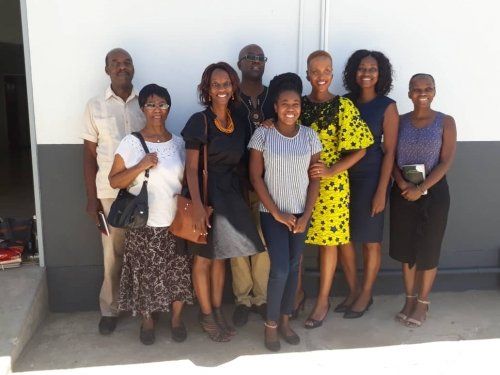
From Left to right: Dad (Nathaniel Hekandjo), Mom (Ndinelao Hekandjo), Barcelona (daughter), O'Brien (son), Lucy (Barcelona's daughter), Palesa (O'Brien's wife), Ida (daughter), and Sabina (daughter)
As O'Brien and his sister, Ida, left home to further their tertiary education in Cape Town (South Africa) they received strict warnings from their parents not to get "brainwashed" into joining any churches, but to focus on their education. But, when they returned home for the holidays, they had not only joined a church but also got baptized. "The seed of God's word was first planted in me by Ivor Botha (who is now one of the evangelists in the Johannesburg church) and to this day, everything I had learned as a young disciple has defined every single life choice I've made," says a very thankful O'Brien.
His sister Ida Muskasa appreciates her own conversion. "I first attended church because my brother (O'Brien) had invited my best friend and my sister Barcy (Barcelona) to church and I didn't want to stay behind on my own. All three of us started studying the Bible but I was the only one who ended up getting baptized in 1998," Ida remembers.
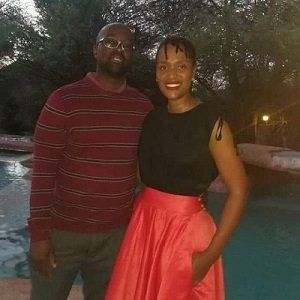
In 1999, Ida invited Palesa, who would become O'Brien's wife, and her sister-in-law, to a Bible study. Palesa (on the left, with O'Brien) grew up in a traditional church and had been searching for a place of worship of her own choosing. "Even though I'd been an avid churchgoer all my life, I still felt that I didn't truly know God and needed to find Him for myself," she says. O'Brien and Palesa are now focusing on raising their two boys (Kgosi and Kabelo) in the fear of the Lord. They hope that, with the positive influence of their extended family and prayer, the boys will follow in their footsteps.
O'Brien's parents, Meme Ndinelao and Tate Nathaniel Hekandjo, noticed the immediate changes they saw in their children. "At the time we had a family run mini-market and I use to buy some of my stock from vendors who might not have obtained the goods through honest means. When my son discovered this, he was very unhappy and asked me how I was any different from a thief? This really cut me to the core but I was also touched by his honesty. I then decided to visit the church as I wanted to change who I had become," says Meme Ndinelao. She was baptized in 2010 but felt something was missing. She had started on a new path but had left her husband behind. She had to wait three years until her husband joined the family of disciples in 2013. "The heavy weight was lifted and I felt tremendous peace and joy," she adds.
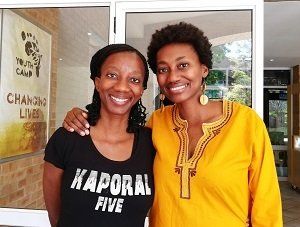
The year 2016 proved to be an incredibly fruitful year for the Hekandjo family. O'Brien's sister, Barcelona (on the left, with Ida) was added to God's family in June of that year. "Looking back I realized that I needed to experience the unconditional love, peace, and joy that my mom had spoken of, to fully understand what she meant. I'm learning the boundless power of God's love and how it can affect positive change in all of us. Becoming a disciple is the best decision I've ever made for myself and my three children," she says.
Sabina Nghuunduka (Hekandjo) was baptized in September 2016 in the south-west London church (in England), shortly after Barcelona traveled to the UK to visit her. The two made a trip to Spain, where the hospitality of the disciples there really touched Sabina. She was also warmly welcomed by the church in London, and to her joy, discovered their meetings were only a 15-minute bus ride away from where she lived. "My journey to becoming a disciple was so unexpected - but it taught me that God really knows our hearts and when they've softened enough to receive Him. The timing was perfect," Sabina shares.
Her husband, Nestor Nghuunduka, first visited the church in London in July and attended the church in Namibia on his return and started studying the Bible with O'Brien soon after. "When I started seeing the changes in my wife (Sabina), I wanted us to take this journey of growth together in faith, keeping God front and center in our marriage." He made Jesus Lord of his life in November 2016. "I continue to learn and grow every day and my wish is that God will strengthen us and show us how we can be of more service to Him as we continue to grow in faith," he adds.
In 2017, Lucy Soabes (Barcelona's daughter) was baptized the night before her 18th birthday. My decision to study the Bible was entirely selfish because it made me happy and excited to know God, it gave me a sense of peace, as I was feeling a bit lost and I had a sense a big piece of my life puzzle was missing," she says.
The Hekandjo family's faith has proven to be very infectious. They are putting 1 Timothy 4:16
into practice: "Watch your life and doctrine closely. Persevere in them, because if you do, you will save both yourself and your hearers."
More from Southern African Churches of Christ
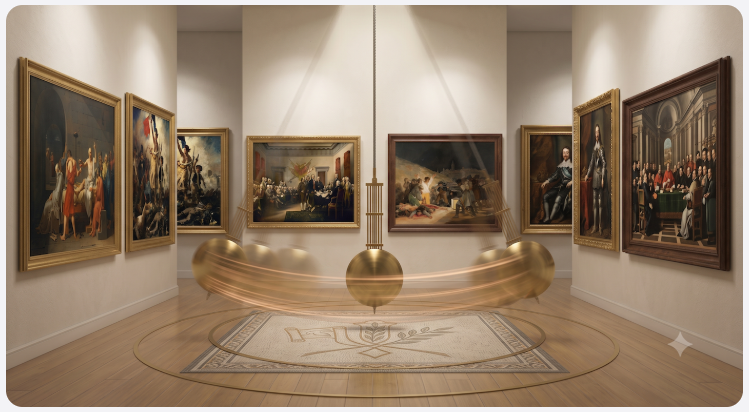
The physics of the pendulum Picture an old grandfather clock in a quiet hallway. Its long brass pendulum swings steadily: tick, tock, tick, tock. Now give that pendulum a hard shove to the right. It does not simply glide back to the center and stop. It races right past the middle and sways just as far to the left. Left to its own momentum, a pendulum never rests at either extreme; it finds peace only when it hangs still at the center, held by gravity and its fixed point. The church behaves in much the same way. Push her too far toward one side of a truth and she does not gently settle into balance, she swings. Often for a whole generation toward the opposite error, and then back again, wounding people at both ends of the arc. And here is the crucial thing the clock teaches us: the pendulum comes to rest not by being frozen in place, but by being held. Balance is not the absence of force; it is the fixed point that keeps opposing pulls in tension so that the weight can finally hang still.
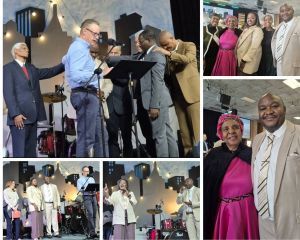
Johannesburg church appoints Mpho and Pumla Khalo as evangelist and women's ministry leader. They serve in the Soweto region.
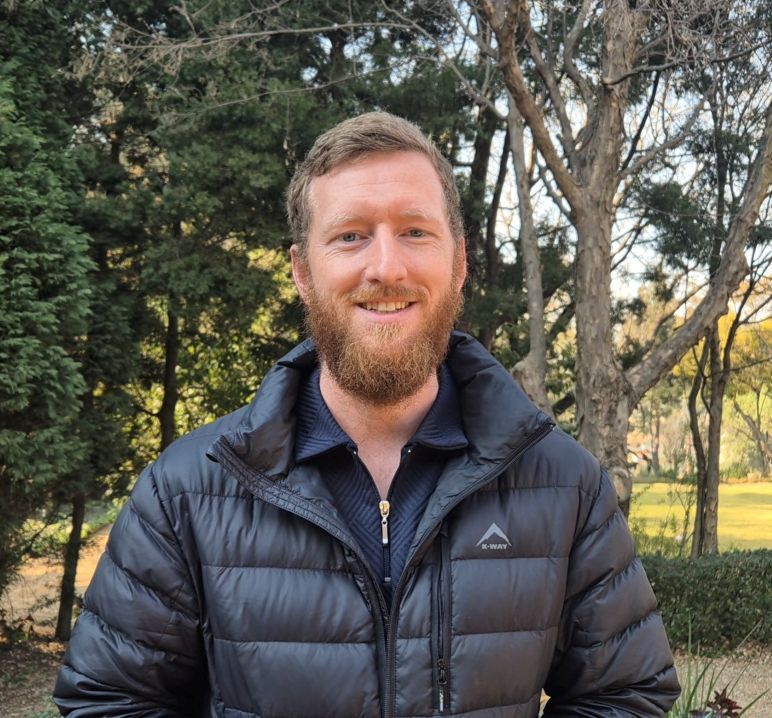
Campus minister Jake Graham shares about Johannesburg’s campus ministry and highlights Campus Encounter 2026 filled with teaching, fellowship and fun.