
Angola Baptisms, Missionary Trip and 'Olympics'

Judia Rodrigues • December 4, 2024

Highlights of 2024: Angola

Young people on a beach in Angola

This past year has been one of incredible blessings and spiritual growth in our community. Here’s a look at some of the highlights that have brought us closer together and deepened our faith:

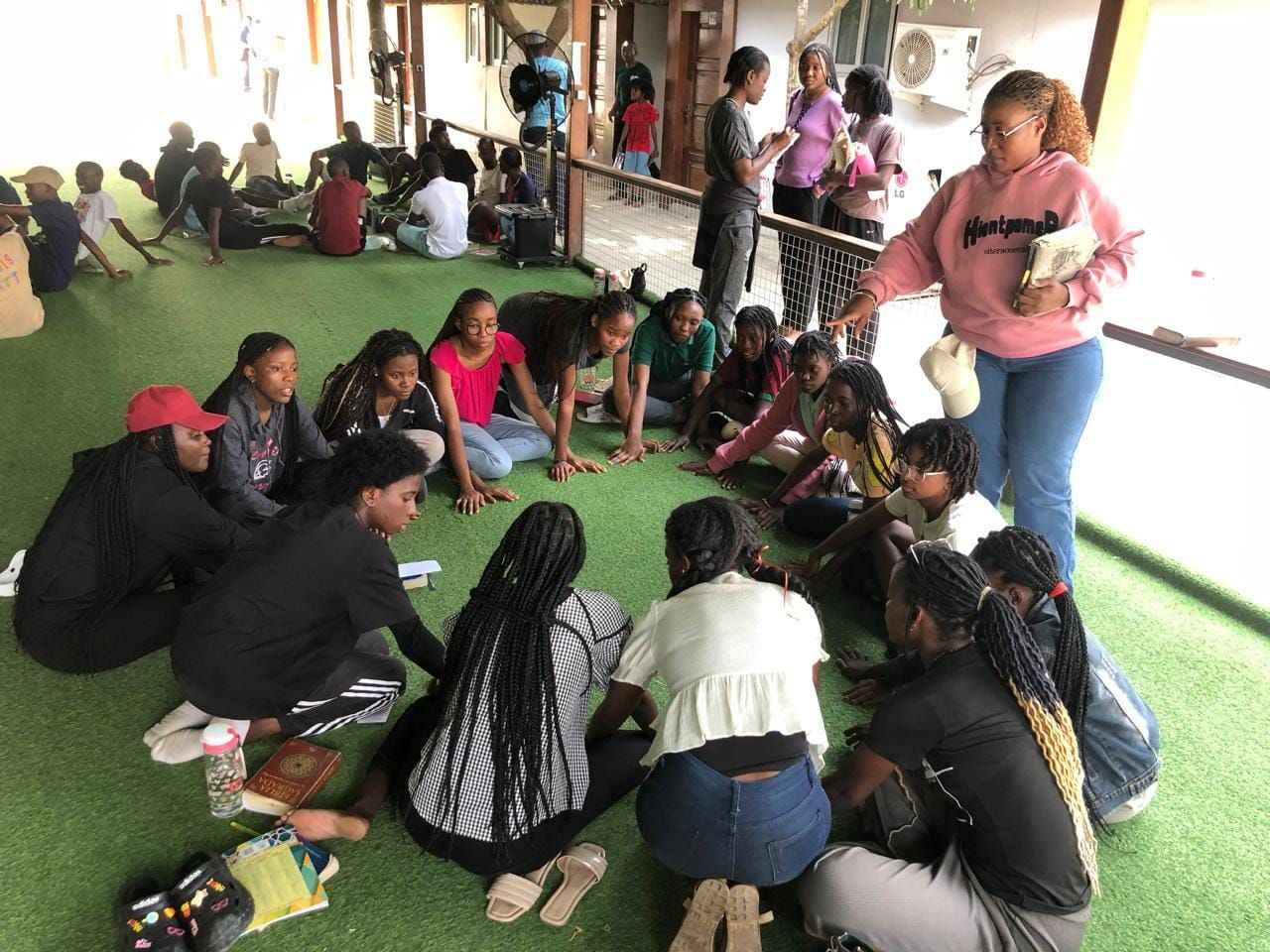
Youth Camp: We hosted our very first youth camp, welcoming 65 enthusiastic campers. It was a time of fellowship, learning, and creating memories that will last a lifetime.

Women’s Retreat: In May, our women’s retreat was a truly special event, featuring our beloved sister Deanne as the host. It was during this retreat that Mama Dorotéia, a mother of two brothers in the church, felt moved to ask what she needed to do to be baptised. Her decision to actively study the Bible and commit her life to Christ was a testament to God’s work in our lives.

Baptisms: We celebrated several baptisms this year! In addition to Mama Dorotéia, Juju's two nieces, Djamila and Angelina, were baptised, one of whom has been attending since her kids kingdom days. Brother Geraldo, restored to faith in 2022, continues to work toward his goal of seeing 10 family members baptised. This year, he had the joy of witnessing the baptisms of his nephew and granddaughter.

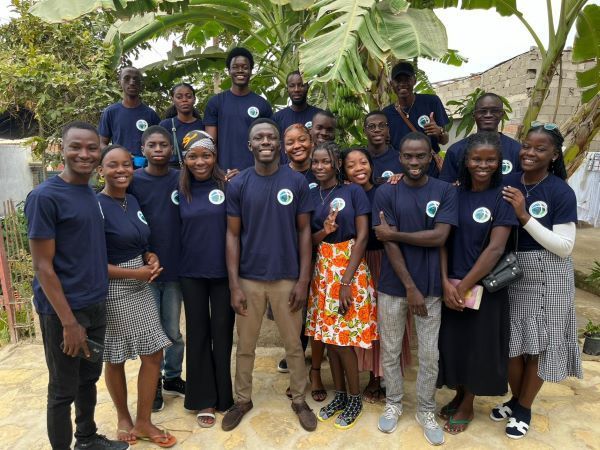
Mission Trip to Benguela: Our campus ministry embarked on a two-week mission trip to Benguela, where they encouraged the brothers and shared the gospel. The trip resulted in 48 active Bible studies and a first baptism—a wonderful testament to God’s power in action.

Encouragement from Afar: We were blessed by the visit of Bible teacher Gilbert Kimeng and his family from Nigeria, who made their second trip to Benguela to uplift and inspire the brothers there.

Collective Dates: Our monthly collective dates, open to all ministries, brought vibrancy and unity to our church. They’ve become cherished opportunities to build stronger connections as a community.

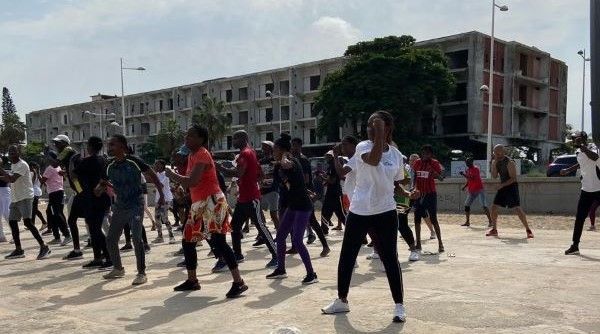
Olympics for New Disciples: This year marked our second Olympics for new disciples—a unique event combining fun with deep scriptural engagement. Participants memorised 60 scriptures and practised leading Bible studies with friends. It was an inspiring way to celebrate and encourage spiritual growth.

As we reflect on these milestones, we are filled with gratitude for God’s work in our church. Let’s continue to pray for one another and look forward to all He has planned for us in the coming year!


Check out the photos in the gallery below:

  • baptism in sea

    Angelina's baptism

    Button
  • Group eating at tables

    Slide title

    Churchwide collective dates

    Button
  • Dancing on beach

    Slide title

    Write your caption here
    Button
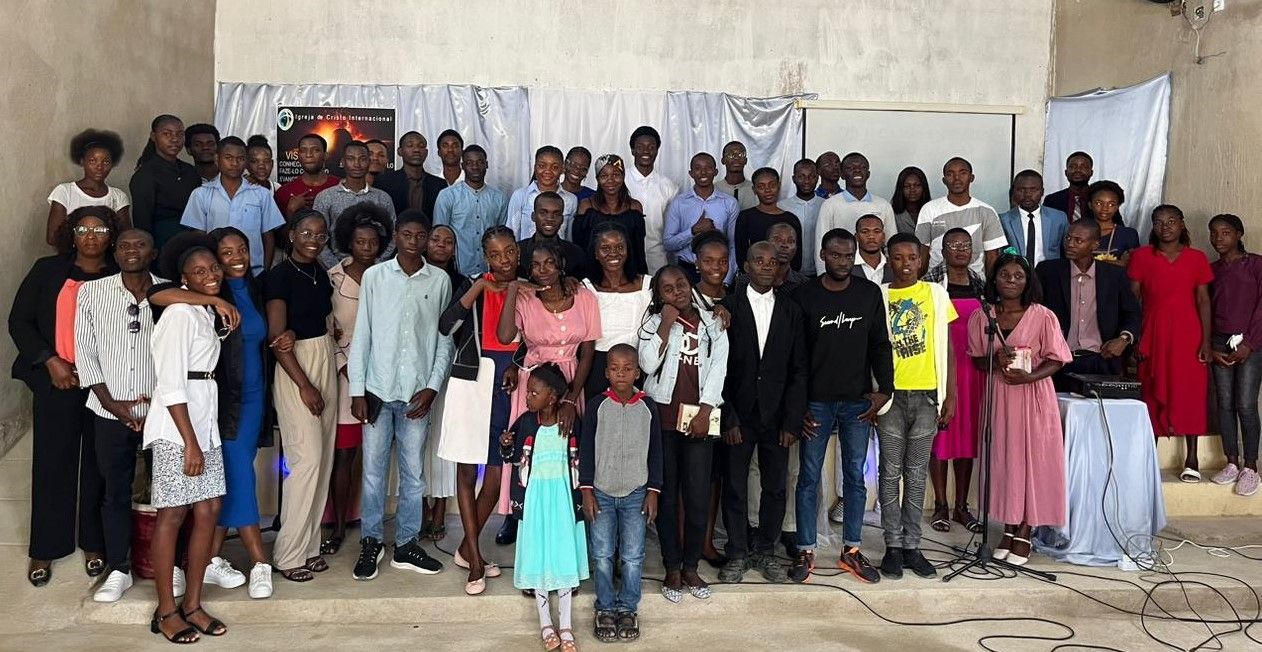
  • group of church members

    Missions trip to Benguela

    Service in Beguela

    Button
  • Youth enjoying games at camp.

    Slide title

    First youth camp.

    Button
  • Campus students.

    Slide title

    Campus trip to Benguela.

    Button

More from Southern African Churches of Christ

By Justin Renton August 4, 2026
In the messy arena of human relationships, whether in marriage, the workplace, church family, or the volatile world of online discourse, we constantly feel the pull of opposing forces. One voice urges us to defend truth fiercely; another calls us to extend grace generously. This is the divine tension of disagreement: holding both conviction and compassion without letting go of either. Today, we turn to a passage that cuts to the heart of how we handle differences: “My dear brothers and sisters, take note of this: Everyone should be quick to listen, slow to speak and slow to become angry, because human anger does not produce the righteousness that God desires.” – James 1:19-20 (NIV) James, writing to scattered believers across the nations, doesn’t offer fluffy advice. He gives a practical, counter-cultural blueprint for godly relationships: Be quick to listen. Slow to speak. Slow to anger. These aren’t suggestions for better conversations; they are directives for producing the righteousness God desires. This passage applies to husbands and wives, children and parents, bosses and workers; everyone from the pulpit to the pew. We all need to train ourselves to be better listeners. The divine tension in James’ command Here lies the tension: Listening requires humility and self-control, while speaking (especially in defense of truth) feels urgent. Anger can arise when we perceive injustice or error, yet James holds these in balance. We must lean into listening first, restrain our tongues, and guard our hearts against hasty wrath. Why? Because “human anger does not produce the righteousness that God desires.” This isn’t a ban on all anger; Jesus displayed righteous anger in the temple (John 2:13-17). But human anger, tainted by our flesh, tends toward self-justification, escalation, and sin. It rarely births the fruit of the Spirit. The tension calls us to slow down enough for the Holy Spirit to lead, rather than our adrenaline. What science reveals about anger and “hearing” Modern neuroscience echoes what James knew by inspiration. When anger flares, our brain undergoes an “amygdala hijack.” The amygdala, the brain’s alarm system tied to fight-or-flight, floods the body with adrenaline and cortisol. This redirects resources: our heart rate spikes and oxygen flows to muscles for action, but our higher reasoning centers in the prefrontal cortex – responsible for judgment, empathy, and nuanced thinking – get suppressed. In this state, our ability to truly “hear” another person diminishes dramatically. Active listening, the tool that clarifies, disarms, and seeks understanding, becomes nearly impossible. We filter everything through threat detection, empathy drops, and we stop processing the other’s words for their actual meaning. Instead, while they are still speaking we start crafting rebuttals or counterattacks. This explains why conflicts escalate so quickly: we literally cannot hear well when flooded with anger. James’ call to be slow to anger is not just spiritual wisdom; it aligns with how God designed our brains to function best when governed by self-control rather than unchecked emotion. Recognizing our physiological limits isn’t about suppressing feelings, it’s about guarding our capacity for reason so we don’t accidentally sabotage the very justice we seek to defend. Even if the other person is operating out of a completely hijacked, high-emotion state, our calling to maintain self-control and clear thinking remains. When our prefrontal cortex goes offline, our hijacked brain defaults to intellectual shortcuts. This emotional flooding is precisely what predisposes us toward constructing caricatures, like the straw man, rather than engaging with the actual person.
By Justin Renton July 9, 2026
On June 6, 1944, Allied forces stormed the beaches of Normandy. In the brutal hours that followed, the course of World War II shifted permanently. The enemy’s capacity to win had been broken. And yet, the fighting raged on for 11 more months. Soldiers still died; cities still burned. Berlin had not yet fallen. But every Allied commander knew the truth: what happened on D-Day determined what would happen on V-E Day (Victory in Europe Day). Victory was certain, even though it was not yet complete. Through his death and resurrection, Jesus Christ stormed the ultimate beach. The decisive battle against sin, death, and darkness has already been won. And yet, we are not yet living in the full experience of that victory. The war is over, and the war is still going. Not because the outcome is in doubt, but because we live between D-Day and V-E Day. This pattern – already won, not yet complete – is the “already but not yet,” and it is not a contradiction. It is the very fabric of the Christian life. As we’ve seen across this series, the fullness of God’s truth is rarely found in tidy, isolated categories. It is held in divine tension, where seemingly opposing realities coexist, each completing and guarding the other. And nowhere is that tension more vivid than in what Scripture says about our own salvation. The Biblical paradox The New Testament speaks of our adoption, redemption, salvation, sanctification, and resurrection in a way that constantly surprises us: as both accomplished facts and future hopes. This is not a theological error; it is the deliberate structure of a story that is already finished by the Author but still being written by the characters. Adoption Already: “You have received the Spirit of adoption as sons, by whom we cry, ‘Abba! Father!’” – Romans 8:15 Not yet: “We ourselves groan inwardly as we wait eagerly for adoption as sons, the redemption of our bodies.” – Romans 8:23 Redemption Already: “In him we have redemption through his blood, the forgiveness of sins.” – Ephesians 1:7 Not yet: “You were sealed for the day of redemption.” – Ephesians 4:30 Salvation Already: “For it is by grace you have been saved, through faith.” – Ephesians 2:8 Not yet: “How much more shall we be saved from God’s wrath through him!” – Romans 5:9 Sanctification and resurrection Already: We are already sanctified in Christ and raised with him. – 1 Corinthians 1:2 and Ephesians 2:6 Not yet: We await final sanctification and the future resurrection of the dead at the last trumpet. – 1 Thessalonians 5:23–24 and 1 Corinthians 15:52 The same salvation is being described as past, present, and future. We have been saved. We are being saved. We will be saved. This is not a contradiction, it is the both/and of divine tension. Understanding the timeline To make sense of this, we need to understand how Scripture structures history. Jewish thought divided all of time into two ages: “This age” — the present age marked by sin, suffering, and death — and “the age to come,” when God would restore all things, defeat evil, and reign in fullness. The expectation was that these two ages would be strictly sequential: this age ends, the next one begins. What no one fully anticipated was that through the resurrection of Jesus and the outpouring of the Holy Spirit, the “age to come” broke into “this age” before it was over. We now live in what theologians call “the age between the ages.” The Kingdom of God has arrived, and it is still arriving.
By Justin Renton June 1, 2026
In every major conflict, whether political, personal, or spiritual, there is almost always a sliver of validity on both sides. Grievances are real. Injustices are felt. Leaders on the “wrong” side can even articulate legitimate frustrations.
Show More