
A Christmas like no Other
Shiru Muhoho-Minni • March 23, 2021
Trusting God amid the pandemic, Part Three
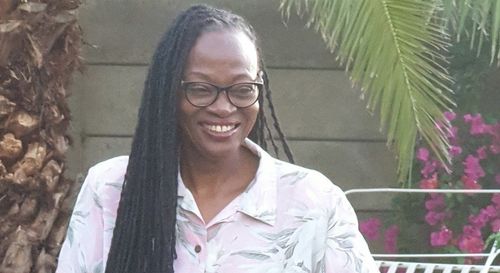
Dr Shiru Muhoho-Minni is in her 60s, and part of the singles ministry in the Windhoek International Church of Christ in Namibia. She describes her encounter with the COVID-19 virus:
“COVID who?” I asked my friend Bacy in confusion, as my mature sisters and I were lying on top of a huge rock and enjoyed one of the most beautiful sunsets I’d seen in a long time. Watching a play of colours behind the amazing Namibian sun dunes, a marvel of God’s creation; I immersed myself in a daydream, a feeling of a surreal world devoid of virus and such other calamities. My friend Bacy had asked me something about COVID-19, but in the world, I was in at that moment, COVID-19 did not exist. I was not even sure I had heard of the word before.
Fast forward to Christmas Day 2020. I was sitting at the furthest end of the garden with a plate of food served from the beautifully laid out Christmas lunch table where my daughter and niece were enjoying the sumptuous meal. They had specially prepared it to cheer me up. Although was separated from the lunch party table which I would’ve loved to be part of, spiritually I refused to be bowed down by the separation. Courtesy of COVID-19, I ended up alone in my little corner of the garden on Christmas Day. COVID-19, was the virus that in my previous self-opinionated life was a disease that affected others, not me.
It started as a little dry cough, headache and fever. Nothing to worry about, I told myself. After all, I had gone through major colds and flus before. On Day 3 of the “little flu”, I started experiencing a foggy feeling under the crown of my head. I went to the pharmacist who gave me medication for my symptoms. It then dawned on me I might have contracted COVID, but then it was a Friday afternoon–the day my doctor worked half-day. I started wearing masks and gloves; I locked myself in the bedroom for the entire weekend and sanitized myself until I started smelling like a medicine cabinet.
On the Monday, I went to see my doctor, who said that I might or might not have COVID, but I did not need a test. Instead, I should just continue with the medication that I got from the pharmacist, after all even if I tested COVID, they’d advise me to take the same medication. All I needed was to self-isolate. He further added that he was not afraid of contracting the virus after all. Everyone would get it; it was just a matter of when. His casual attitude surprised me. I went home and continued to self-isolate. I felt much better, but as luck would have it, I got a call from my doctor’s practice informing me that he had confirmed COVID positive and I should self-isolate and go for testing after three days, which I did with my niece and my daughter. Twenty-four hours later, while happily working out on a treadmill, feeling almost recovered from my little flu, the doctor’s practice called again with the results that my daughter and niece were negative but I was positive.
My emotions went on a roller coaster, I broke down crying, not because I was positive, but at the realisation of God’s mighty hand at play in this situation. I had been walking around with the deadly virus and I didn’t pass it on to my family. What a mighty God I have. I cried in thanksgiving for his protection and grace.
The COVID centre called me two days later to give me COVID survival instructions. I had to self-isolate for 14 days. By now I was an expert in self-isolation. Self-isolation became my buzz word for December 2020. As I sat, slept, read and ate in my bedroom and exercised in the garden (sometimes in the dead of the night); I went through different emotions:
Self-pity and worry–how could this happen to me? Why me? Where did I pick it from? What if it was just me and my daughter in the house, how would she have coped looking after me and herself? Had I updated my will? What if I died, who would look after her?
Weird self-diagnosis–For reasons that until now I cannot decipher, I decided that the virus was inhabiting under my fingernails, so I cut them almost to the roots, and I would check them every day to ensure that they were not growing back. I would scrub my fingers red, to ensure that I did not contaminate the rest of my body with the virus by depositing whatever my fingers were carrying. As if the virus was not already living in the same body that held my fingers in place. My nails become my number-one enemy.
Claustrophobia–Although I have burglar-proof doors and windows, which I left open day and night, I knew I could get out of the room whenever I got claustrophobic, but that did not stop me from hyperventilating every time; I remembered I was in self-isolating.
The crying–Out of nowhere, and for no apparent reason, I found and still find myself on the verge of tears. Something that rarely happened to me before COVID. I wonder what this means or what causes it.
Self-isolation had its advantages: it was time to for self-reflection on my relationship with my family, friends and others. I reflected on my contribution to the community I live in. Am I a good person? Do I give the needy from the goodness of my heart or because I want to pat myself on the back?
Most of all, I reflected on my spirituality and my relationship with God. I vowed to be a better person and count my blessings every day, whatever the situation. My love of God and appreciation of friends, family and others increased. I vowed to glorify God not only in prayer and worship, but also in action. I take count of my actions every evening before I sleep.
Am I a better person today? Yes, in some areas; in others it is a work in process; but I believe with the Holy spirit by my side I will succeed. The same God who saw me and my family through COVID-19 will take care of my future.
My encounter with the deadly virus was a humbling experience and a reminder that a little dry cough, a little headache and a little fever could kill you, your family and others you might never know. Be responsible! And God will take care of the rest.
To God be the glory!”
More from Southern African Churches of Christ
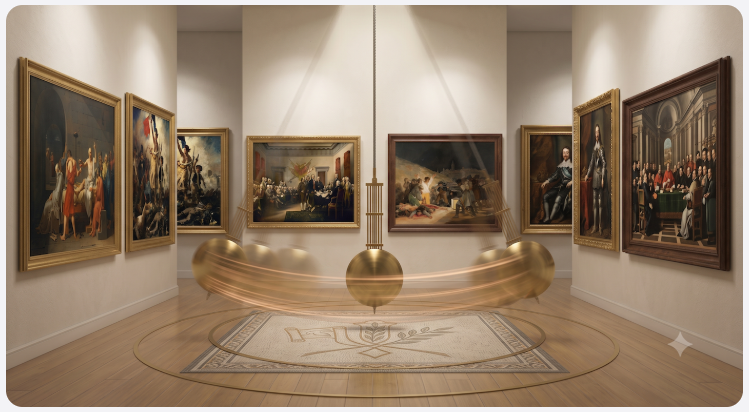
The physics of the pendulum Picture an old grandfather clock in a quiet hallway. Its long brass pendulum swings steadily: tick, tock, tick, tock. Now give that pendulum a hard shove to the right. It does not simply glide back to the center and stop. It races right past the middle and sways just as far to the left. Left to its own momentum, a pendulum never rests at either extreme; it finds peace only when it hangs still at the center, held by gravity and its fixed point. The church behaves in much the same way. Push her too far toward one side of a truth and she does not gently settle into balance, she swings. Often for a whole generation toward the opposite error, and then back again, wounding people at both ends of the arc. And here is the crucial thing the clock teaches us: the pendulum comes to rest not by being frozen in place, but by being held. Balance is not the absence of force; it is the fixed point that keeps opposing pulls in tension so that the weight can finally hang still.
Johannesburg church appoints Mpho and Pumla Khalo as evangelist and women's ministry leader. They serve in the Soweto region.
Campus minister Jake Graham shares about Johannesburg’s campus ministry and highlights Campus Encounter 2026 filled with teaching, fellowship and fun.