
30 Years and counting: Church in Harare, Zimbabwe gear up for conference and birthday celebrations
Justin Renton • June 13, 2019
As the church in Harare, Zimbabwe, celebrate their 30th anniversary and prepare to host the Southern Africa Leadership Conference from June 14-16, four disciples reflect on their personal and the church's journeys since 1989:
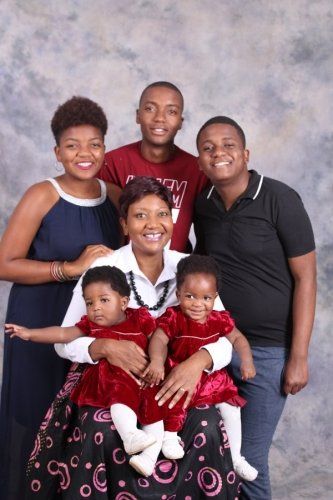
CHOICE DAMISO:
A friend invited me to church and I was baptized in August1989, while a first-year law student at the University of Zimbabwe and two weeks before my 21st birthday. I got married to Collins Damiso in 1995 and we've been blessed with five children (22-year-old Collins Jr, 20-year-old Dawn-Cecilia, 17-year-old Mark and two-year-old twins Miracle and Marvel. Dawn Cecilia is a disciple in the campus ministry at the University of Zimbabwe.
From a personal point of view, I feel blessed that I've remained faithful to God over the years. It hasn't been an easy journey but I'm glad I'm here and still standing. The Lord has been amazingly good to me and my family. I'm very grateful for the family of disciples around me, who prop me up by their involvement in my life, but mostly by just being a good example to me.
Over the last 30 years, I've seen several disciples pass on to be with the Lord. It has always been sad when a disciple dies but there's always a sense that it's inevitable and of satisfaction that the brother or sister has fought the good fight and is now resting with Christ. Like Christ on the cross, they can say 'it is finished'. Such deaths renew my strength to hold on till the end.
My hopes and dreams are for the church to grow in maturity and unity and to appeal to a greater diversity of people, while holding to the truth. I also hope that as a church, our leaders will have the courage to introspect and ask God to show us what we need to change for His eternal glory.

LUCA TORONGA:
I became a member of the Harare International Church of Christ (HICOC) in 1990 and became part of a vibrant singles and campus ministry. I have lot of great memories. Thirty years later, being a faithful disciple of Christ is a humbling experience, with the sad reality that the greater percentage of those who studied the Bible with me have left. This year's Leadership Conference and 30th-year anniversary are profound reflections and celebrations of who God is and what He has done for His people. It's a time to be joyous and to be ready for change and revival.
I'm reminded of God's countless miracles, which I've experienced first-hand. I appreciated having pure, godly dating relationships in church; falling in love with and getting married twenty-three years ago to Noeline, being blessed with three God-Loving and God-fearing children - two of whom are fired-up baptized disciples, (Luca-Joseph and Megan-Rose are both in the campus ministry), while our 'littlest-one' Iman-Felicia is in high school.
As for the church in Zimbabwe, we implore the Almighty to renew our strength for life's daily struggles. We beseech Him to grant us the spiritual stamina to worship Him in spirit and in truth, and for His mercy, goodness and guidance as our country goes through this transitory phase of socio-political-economic challenges."

ALPHA GURUPIRA:
I studied the Bible in June 1989 on campus and was baptized on 27 September 1989 in Dave and Ann Peden's house in Milton Park. I'm married now and have three kids, two of my children are also disciples. What's kept me going, is focusing on the cross of our Lord Jesus Christ, the word of God and prayer. Nothing beats the basics. Having someone in my life to mentor me spiritually has been at the centre of it all, and it's my responsibility (to make sure it happens).
The 30th birthday celebrations is inspirational to me, it makes me recommit myself to Jesus and his mission. I just want to participate in the service of making disciples. My hopes and dreams for the church is to spread to the provinces and every district in Zimbabwe.

DANIEL DUBE:
I'm currently in the media ministry, which is my passion, I became a disciple 27 years ago in Hillbrow, Johannesburg (South Africa) in 1992, while I was still single, and it became my dream to come home to study the Bible with my family and to serve the church in Harare. From working full-time for the church in Johannesburg in 1994, God gave me that opportunity, in 1995, to come home and serve the church here in Harare. I took opportunity to study the Bible with my family, and I thank God for the sisters who helped my mother to become a faithful disciple. I thank God every day for her.
In 2008 God was merciful and gave me my beautiful wife Chipo Dube and I'm thankful to Duncan and Lisa Comrie who came and performed our wedding. We have three beautiful daughters and one handsome son.
Seeing Harare turning 30 shows that we are now of age and that it's time to have deacons serving and elders shepherding God's flock, which is my dream.
Halala! Amhlophe! Mokorokoro! Congratulations Harare International Church of Christ in reaching 30 years.
More from Southern African Churches of Christ

The physics of the pendulum Picture an old grandfather clock in a quiet hallway. Its long brass pendulum swings steadily: tick, tock, tick, tock. Now give that pendulum a hard shove to the right. It does not simply glide back to the center and stop. It races right past the middle and sways just as far to the left. Left to its own momentum, a pendulum never rests at either extreme; it finds peace only when it hangs still at the center, held by gravity and its fixed point. The church behaves in much the same way. Push her too far toward one side of a truth and she does not gently settle into balance, she swings. Often for a whole generation toward the opposite error, and then back again, wounding people at both ends of the arc. And here is the crucial thing the clock teaches us: the pendulum comes to rest not by being frozen in place, but by being held. Balance is not the absence of force; it is the fixed point that keeps opposing pulls in tension so that the weight can finally hang still.
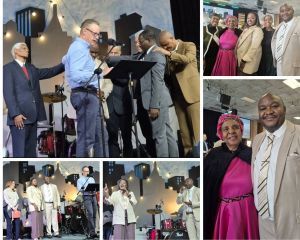
Johannesburg church appoints Mpho and Pumla Khalo as evangelist and women's ministry leader. They serve in the Soweto region.
Campus minister Jake Graham shares about Johannesburg’s campus ministry and highlights Campus Encounter 2026 filled with teaching, fellowship and fun.